
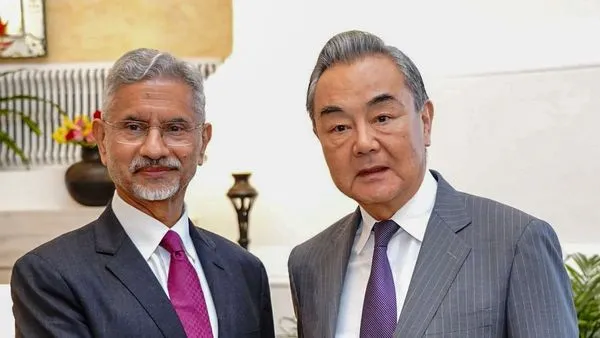
China has lifted export restrictions on fertilizers, rare earth minerals, and tunnel boring machines for India. The move addresses concerns raised by New Delhi and is expected to improve bilateral relations between the two Asian giants.
Key Diplomatic Development
The announcement followed a meeting between External Affairs Minister S. Jaishankar and his Chinese counterpart Wang Yi on Monday. According to reports, Wang assured Jaishankar that Beijing had already started implementing the decision, with shipments of the three critical items underway.
The development comes just ahead of Prime Minister Narendra Modi’s scheduled visit to China, signaling a positive shift in diplomatic ties.
Impact on Indian Industries
The earlier restrictions had disrupted several sectors in India:
Fertilizers: Curbs affected the supply of Di-Ammonium Phosphate (DAP), which is vital during the Rabi season.
Infrastructure: Delays in tunnel boring machine imports slowed key projects, including those relying on equipment from foreign firms with Chinese manufacturing plants.
Manufacturing: Restrictions on rare earth minerals caused shortages in the automotive and electronics industries, raising fears of production cuts.
By lifting the restrictions, China is expected to stabilize supplies and reduce uncertainties for Indian agriculture, infrastructure, and manufacturing.
Strategic and Geopolitical Context
China had cited security considerations amid strained bilateral relations as the reason for imposing the export curbs. However, both nations have taken steps to ease tensions after troop disengagement along the Line of Actual Control (LAC). Recent discussions also focused on confidence-building measures and trade normalization.
Meanwhile, the global trade landscape remains complex. The United States has criticized India’s ties with Russia and recently imposed an additional 25% national security tariff, raising the total levy to 50%. In contrast, Washington has shown more flexibility toward China by extending a trade truce, delaying new tariffs by 90 days, and easing curbs on high-end chip exports.
Outlook for Bilateral Relations
Analysts view Beijing’s decision as a confidence-building measure that could pave the way for broader cooperation. The easing of restrictions ensures a steady supply of critical materials, benefiting Indian industries and reducing supply chain risks.
This development highlights how geopolitical considerations influence global trade decisions. For India, the timely lifting of curbs provides both economic relief and a potential diplomatic opening with its largest neighbor.