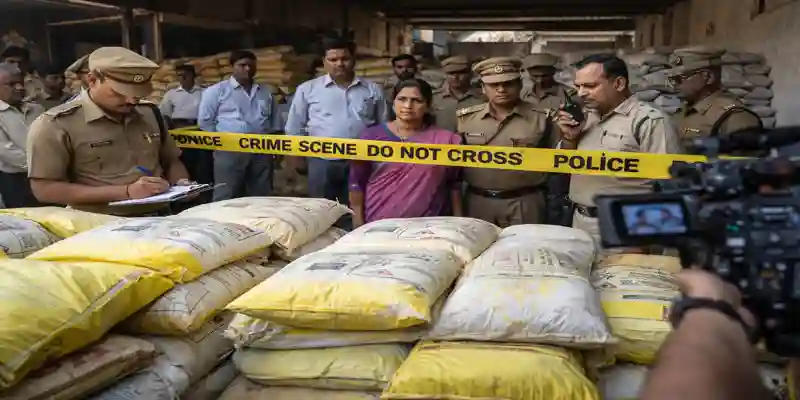
The fertilizer hoarding crackdown India has intensified, with the government cancelling over 6,900 licences and registering hundreds of cases to curb illegal activities and protect farmers’ interests.
Responding in the Lok Sabha, Minister of State for Chemicals and Fertilizers Anupriya Patel stated that fertilizers are regulated under the Essential Commodities Act, 1955 and the Fertilizer Control Order, 1985. These laws empower authorities to take strict action against hoarding, diversion, and black marketing.
Fertilizer Hoarding Crackdown India Sees Massive Inspections
Under the ongoing fertilizer hoarding crackdown India, enforcement agencies have carried out more than 4.66 lakh inspections since April 2025. Authorities issued over 16,000 show-cause notices, cancelled or suspended 6,802 licences, and filed 821 FIRs against violators.
The Centre is working closely with state governments and reviewing enforcement actions on a weekly basis. This coordinated approach aims to ensure transparency and strict compliance across the fertilizer supply chain.
Fertilizer Supply Remains Stable During Rabi Season
Despite strict enforcement, the government has ensured adequate availability during the ongoing Rabi season. Supplies of key fertilizers such as Urea, DAP, MOP, and NPK have exceeded requirements.
The fertilizer hoarding crackdown India has helped maintain smooth distribution and prevent artificial shortages in the market.
Subsidy Support Keeps Prices Affordable
The government continues to support farmers through subsidies. Urea is sold at a controlled price of ₹242 per 45-kg bag under the Urea Subsidy Scheme.
Meanwhile, the Nutrient-Based Subsidy Scheme for phosphatic and potassic fertilizers ensures price stability despite global volatility. Additional support of ₹3,500 per metric tonne has also been provided for DAP and TSP to cover logistics and other costs.
Strict Monitoring to Continue
Officials indicated that the hoarding crackdown India will continue with strict monitoring and enforcement. The government aims to ensure that fertilizers remain accessible, affordable, and available to farmers across the country.