

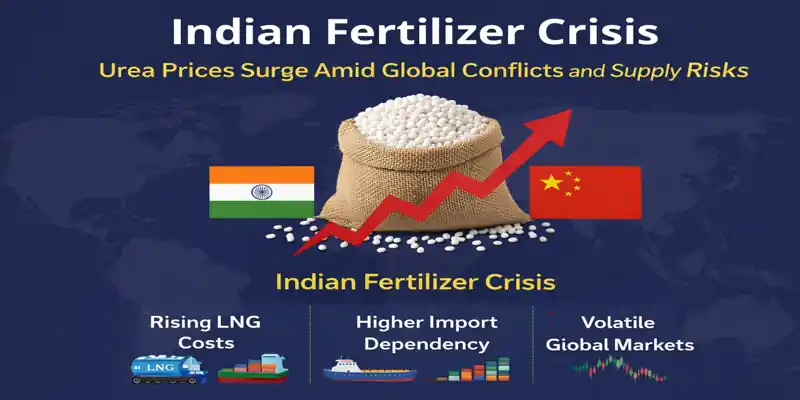
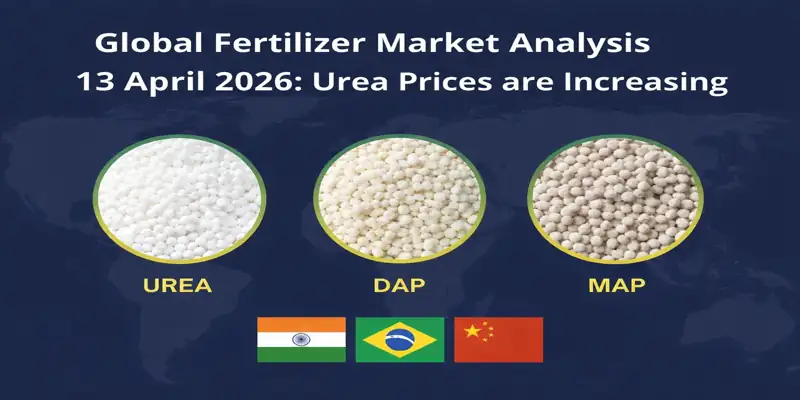

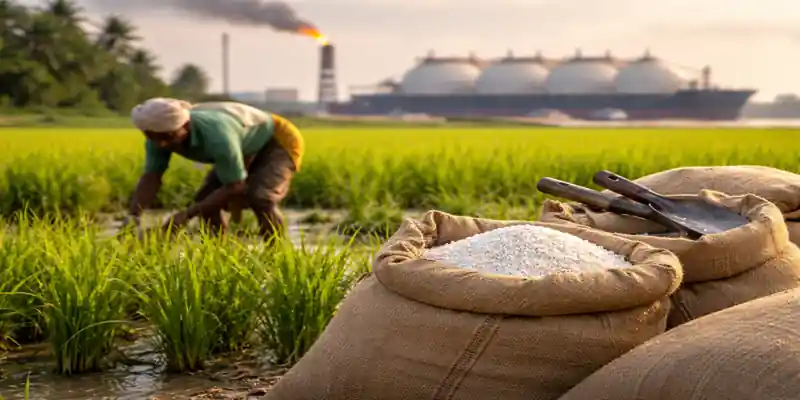

The Indian Fertilizer Crisis is becoming a serious concern as global conflicts and supply disruptions continue to impact the availability and pricing of key fertilizers like urea and DAP. Rising LNG prices, heavy import dependency, and volatile international markets are putting increasing pressure on India’s fertilizer supply chain. As global urea prices surge and phosphatic fertilizers become harder to source, the risks to agricultural productivity and food security are growing. In this context, the Indian Fertilizer Crisis is not just an industry issue but a national priority that demands urgent policy attention and long-term strategic planning.
For India, these global conflicts are not just geopolitical events. They are warning signals.
Because behind every grain of food lies one critical input: fertilizer.
A Silent Dependency
India’s agriculture depends heavily on fertilizers, yet much of it comes from outside the country. Nearly 70% of fertilizer needs rely on imports—either directly or through raw materials like natural gas.
Take urea, the most widely used fertilizer. India consumes around 40 million tonnes every year. Out of this, 10 million tonnes are imported, while the rest is produced domestically.
But even that domestic production has a hidden dependency—85% of it relies on imported gas.
In simple terms, India’s fertilizer system is deeply tied to global markets.
When War Hits the Fields
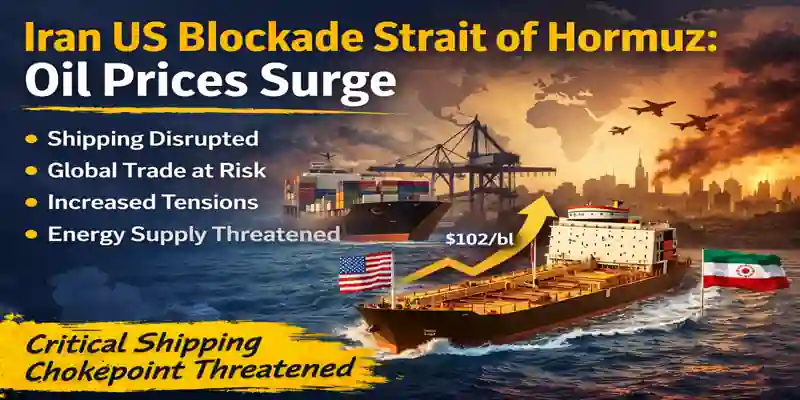
During recent geopolitical tensions, fertilizer markets reacted sharply.
Urea prices surged by nearly 65%, jumping from about $482 per tonne to nearly $795 per tonne within weeks. At the same time, LNG prices—the backbone of fertilizer production—rose by 63%.
For farmers, this could have been disastrous.
But the government stepped in, increasing subsidies to ensure that farmers continued to get urea at affordable prices. While this protected farmers in the short term, it also exposed a bigger issue—India’s vulnerability to global shocks.
The Growing Imbalance
There is another problem quietly building within Indian agriculture.
Farmers are using more urea than required—often twice the recommended amount. Why? Because urea is heavily subsidized and extremely cheap compared to global prices.
This has created an imbalance:
- Excess nitrogen use
- Lower use of phosphatic and potassic fertilizers
Even DAP prices have started rising, increasing by about 15% globally, making balanced fertilization even more difficult.
The Hidden Cost of Cheap Urea
At first glance, cheap urea seems like a benefit. But the reality is more complex.
Only 35–40% of urea applied is actually used by plants. The rest is lost:
- Into the air as harmful gases
- Into the soil and water, causing pollution
Meanwhile, more efficient solutions like liquid urea (with up to 90% efficiency) remain underutilized due to policy gaps.
This is not just an economic issue—it is an environmental one too.
What Can Be Done?
Experts believe India must act now, before the situation worsens.
Some possible solutions include:
- Controlled supply of urea to prevent overuse
- Direct cash transfers (DBT) instead of subsidies
- Encouraging balanced fertilizer use (more phosphorus, less nitrogen)
- Promoting alternatives like Triple Super Phosphate (TSP)
- Reducing long-term dependence on imports
These steps may not be easy, but they are necessary.
A Turning Point for India
India stands at a critical moment.
Global conflicts have shown how fragile fertilizer supply chains can be. Rising prices are just one part of the problem—the real challenge is dependency.
To secure its food future, India must rethink how fertilizers are produced, distributed, and used.
Because in the end, this is not just about fertilizers.
It’s about ensuring that millions of farmers can continue to grow food—and that a nation of over a billion people remains food secure.
