
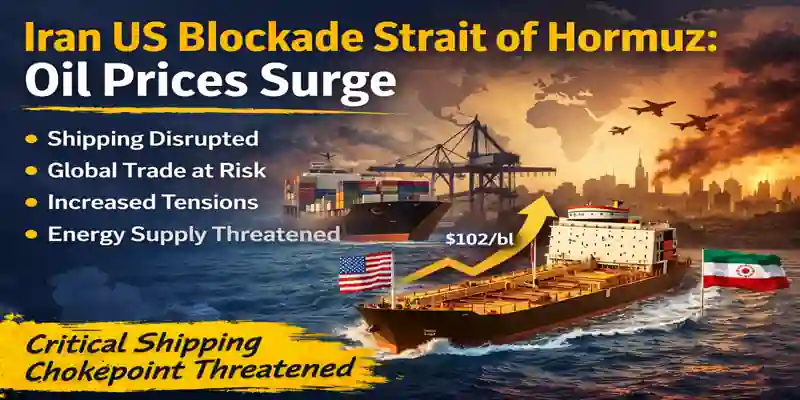



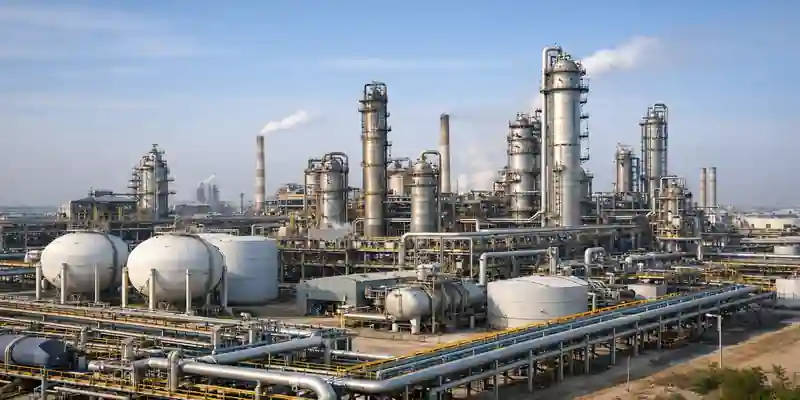

The Iran US blockade Strait of Hormuz has escalated geopolitical tensions and raised serious concerns over global trade and energy supply. As the Iran US blockade Strait of Hormuz disrupts shipping routes and oil flows, markets are reacting sharply with rising prices and increased uncertainty.
Iran stated that if the security of its ports is compromised, no port in the Persian Gulf and the Sea of Oman will remain safe, raising concerns over regional stability and global shipping routes.
Strait of Hormuz at the Center of Conflict
Iran has also announced plans to implement a permanent mechanism to control the Strait of Hormuz, one of the world’s most critical oil transit routes. Under this system:
- Ships linked to Iran’s adversaries may be denied passage
- Other vessels could face strict conditions for transit
- Navigation freedom may be restricted based on Iranian regulations
The United States, however, maintains that it will ensure freedom of navigation, even as it begins enforcing the blockade targeting vessels connected to Iranian ports.
Iran US Blockade Strait of Hormuz Disrupts Global Shipping
The blockade, which began following failed negotiations in Islamabad, marks a sharp escalation in tensions. Talks between the US and Iran lasted over 20 hours but ended without agreement.
While a fragile ceasefire remains in place, the situation continues to deteriorate, with both sides blaming each other for the breakdown.
US authorities have clarified that:
- Ships traveling to non-Iranian ports via Hormuz will be allowed
- Vessels complying with Iranian-imposed conditions may face interception
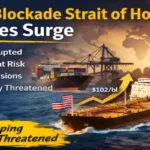
Oil Prices Surge Amid Strait of Hormuz Crisis
Global oil markets have reacted sharply to the escalating conflict.
- Brent crude prices surged to over $102 per barrel
- Prices increased by approximately 8% in a single session
The uncertainty surrounding the Strait of Hormuz—through which a significant share of global oil supply passes—has raised fears of supply disruptions.
Impact of Iran-US Tensions on Global Trade Routes
European leaders have called for urgent diplomatic intervention.
- France has urged a swift and lasting resolution
- The UK and allies are planning a multinational maritime mission
- Focus remains on ensuring safe and uninterrupted shipping routes
Meanwhile, shipping activity in the region remains constrained, adding pressure on global trade and energy markets.
What It Means for Global Markets
The standoff highlights a growing divide:
- The US is pushing for unrestricted navigation
- Iran is moving toward controlled access of key waterways
This conflict could have far-reaching consequences, including:
- Higher energy prices
- Supply chain disruptions
- Increased geopolitical risk
Conclusion
The situation in the Middle East is entering a critical phase, with the Strait of Hormuz once again at the center of global attention. As tensions between Iran and the US escalate, the risk to energy security, trade routes, and global markets continues to rise.
