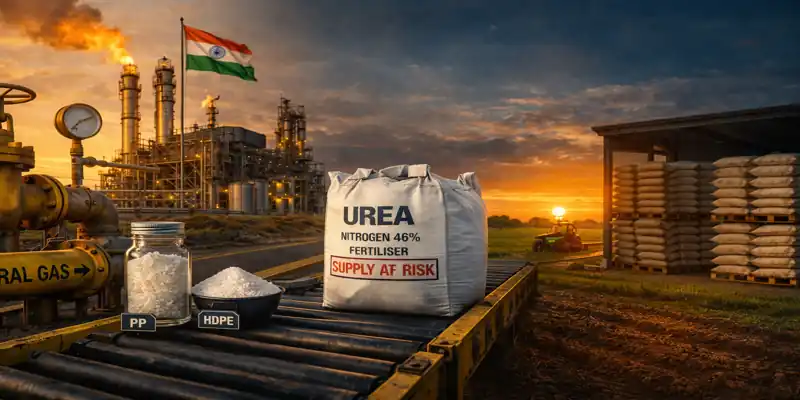
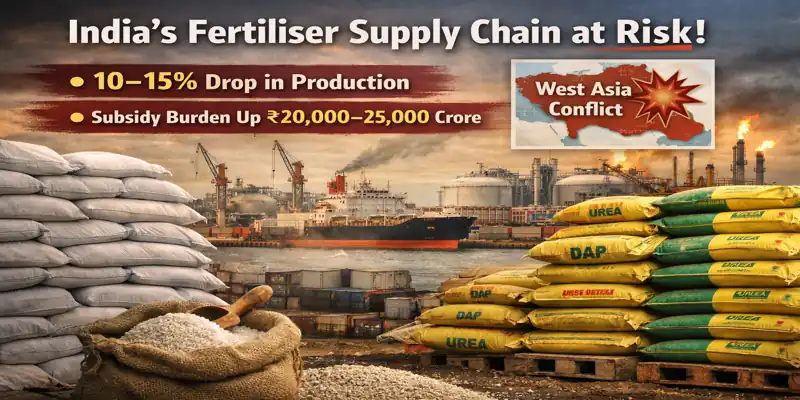
The India fertiliser supply chain is facing potential disruption due to the ongoing West Asia conflict, raising concerns ahead of the crucial kharif season. According to Crisil Ratings, supply issues in LNG and ammonia could impact domestic fertiliser production and increase the government’s subsidy burden.
India Fertiliser Supply Chain May See 10–15% Production Drop
Crisil estimates that disruptions in LNG and ammonia supplies for three months could reduce urea and complex fertiliser production by 10–15%.
Anand Kulkarni, Director at Crisil Ratings, said such disruptions in the fertiliser supply chain could affect availability during peak agricultural demand.
Import Dependence Weakens India Fertiliser Supply Chain
The fertiliser supply chain remains heavily dependent on imports:
- Urea contributes about 45% of total fertiliser consumption
- Complex fertilisers (DAP and NPK) account for nearly one-third
- Around 20% of urea is imported
- About one-third of complex fertilisers come from global markets
Raw material dependency is even higher. Natural gas accounts for nearly 80% of urea production cost, while ammonia and phosphoric acid are also largely imported.
West Asia Disruptions Impact India Fertiliser Supply Chain
West Asia plays a major role in the fertiliser supply chain:
- ~40% of fertiliser imports (FY26, first nine months)
- 60–65% of LNG imports
- 75–80% of ammonia imports
This makes India highly vulnerable to geopolitical tensions in the region.
Rising Prices Add Pressure on India Fertiliser Supply Chain
Supply disruptions have already increased costs:
- Ammonia prices up by ~24%
- International urea prices surged ~50%
These rising costs are putting pressure on the fertiliser supply chain, increasing working capital needs and reducing profitability.
Capacity Utilisation Decline May Hurt Margins
Lower raw material availability could reduce plant utilisation. A 25–30% drop in utilisation may increase energy consumption by 10–15%, impacting margins of urea manufacturers.
Subsidy Burden to Rise Due to India Fertiliser Supply Chain Stress
The stress on the fertiliser supply chain is expected to increase subsidy outgo.
Nitin Bansal, Associate Director at Crisil Ratings, said the fertiliser subsidy could rise by 12–15%, exceeding the initial estimate of ₹1.71 lakh crore for FY27.
Government Measures Support Fertiliser Supply Chain
Some steps may help stabilise the fertiliser supply chain in the short term:
- 70% gas allocation prioritised for urea plants
- Inventory equivalent to three months of demand
These measures can help absorb temporary disruptions.
Long-Term Risks to Fertiliser Supply Chain Remain
However, prolonged disruptions in West Asia could create serious challenges for the fertiliser supply chain, especially during the kharif season.
Future stability will depend on:
- Alternative sourcing of raw materials
- Government policy support
- Global market conditions