Atlas Agro is actively seeking investor participation for its upcoming green ammonia and ammonium nitrate plant in Brazil, a project designed to transform the country’s nitrogen fertilizer supply chain through renewable energy and zero-carbon inputs.
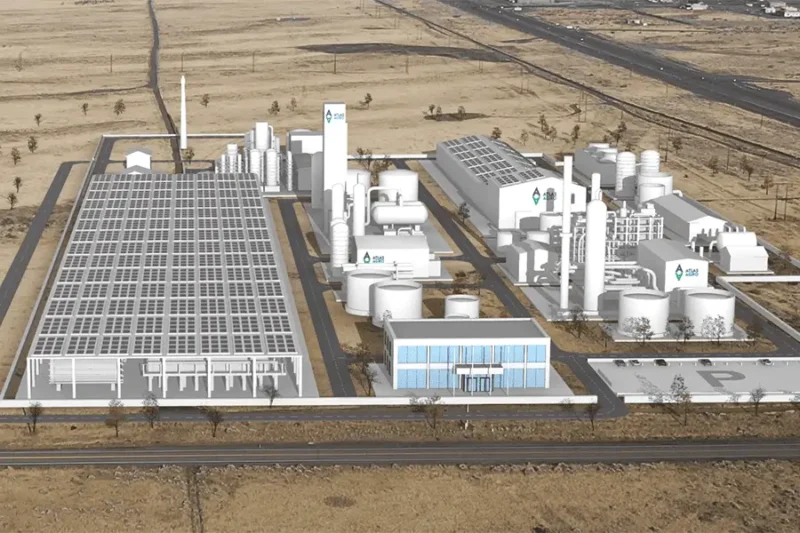
The plant — known as the Uberaba Green Fertilizer (UGF) Project — is planned for Uberaba in Minas Gerais state and will produce more than 500,000 tons of ammonium nitrate per year using renewably generated green hydrogen. The total investment required is estimated at US$1 billion, making it one of the largest green-fertilizer projects in Latin America.
Atlas Agro is currently pursuing around US$20 million in investor funding for engineering and early-stage development work, which feeds into the larger project financing structure expected to reach final investment decision in the coming years. The project is also listed under Brazil’s Climate & Ecological Transformation Investment Platform (BIP), a government-linked initiative promoting sustainable industrial development.
Renewable-Powered Green Ammonia Production
The Uberaba plant will run on renewable electricity sourced from a partnership with Casa dos Ventos, which is expected to supply roughly 300 MW of wind and solar power to generate green hydrogen through electrolysis. That hydrogen will feed ammonia and nitric acid units to produce climate-friendly ammonium nitrate for the Brazilian market.
This marks a significant shift away from Brazil’s dependence on imported grey nitrogen fertilizers. The country imports more than 90% of its nitrogen requirements, making domestic green production both a strategic and environmental breakthrough.
Engineering Progress and Timeline
Atlas Agro awarded FEED (front-end engineering design) contracts in early 2024. Construction is expected to begin around 2025, with commercial operation targeted for 2028. Once complete, the facility will supply farmers and industries with low-carbon nitrogen fertilizers that carry a significantly reduced emissions footprint.
Investment Case
Analysts see the project as an attractive opportunity for investors looking at:
Green hydrogen and green ammonia markets
Large-scale decarbonization projects
Brazil’s expanding agricultural and fertilizer sectors
ESG-aligned industrial investments
The project brings high-impact potential as green ammonia becomes a key tool for climate-focused agricultural production.
Market Significance
Brazil is one of the world’s largest agricultural producers yet remains heavily dependent on imported fertilizers. A large domestic green-ammonia facility can:
Improve supply security
Reduce price volatility
Cut carbon emissions
Create long-term competitiveness for the fertilizer sector
Support national climate and energy-transition goals
The Uberaba project could also serve as a model for similar developments across emerging markets.