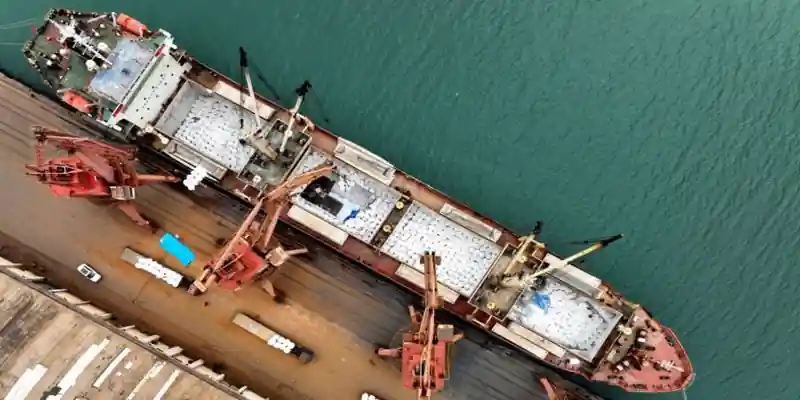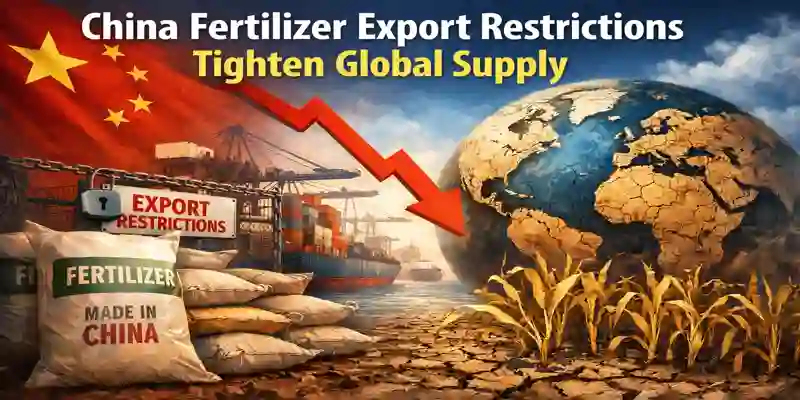
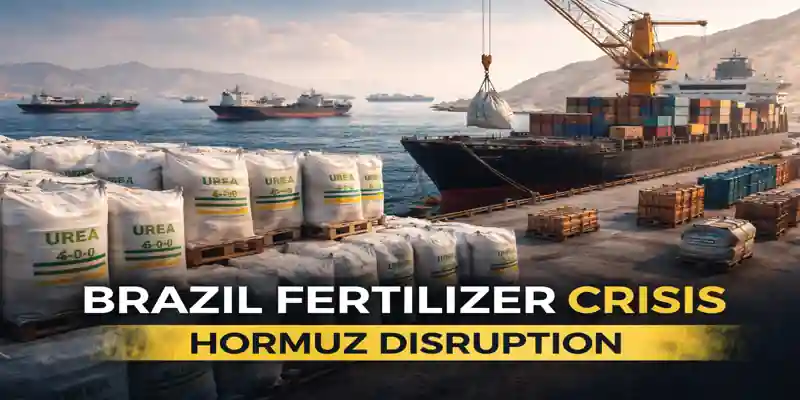
The Brazil fertilizer crisis is intensifying as disruptions in the Strait of Hormuz continue to block critical shipments. Brazil, a major agricultural producer, depends heavily on imported fertilizers. However, ongoing geopolitical tensions are delaying supplies, increasing costs, and raising serious concerns about crop production and global food prices.
The ongoing disruption in the Strait of Hormuz is emerging as a major threat to global agriculture, with Brazil fertilizer crisis concerns now intensifying. The strategic waterway carries nearly 20% of global oil and around one-third of seaborne fertilizer trade, making it a critical “energy artery” and “food artery” for the world.
As the spring planting season begins in the Northern Hemisphere, shipping blockages linked to geopolitical tensions involving the United States, Israel, and Iran are disrupting the flow of essential commodities. This situation is raising fears of fertilizer shortages, rising freight costs, and higher food prices worldwide.
Brazil Faces Fertilizer Supply Risk
Brazil, one of the world’s largest agricultural producers and exporters, is highly dependent on imported fertilizers. The country sources a significant share of its requirements from the Middle East, Russia, and North Africa.
Bernardo Silva, executive director of Brazil’s fertilizer input association, warned that the current crisis has exposed the “vulnerability of Brazil’s fertilizer market.”
Due to the Hormuz disruption, Brazil is now facing delays in securing critical nutrients such as urea, which could impact crop productivity.
Gas Supply Disruption Hits Fertilizer Production
Natural gas is a key raw material for nitrogen fertilizers like urea. The Middle East plays a crucial role as both a liquefied natural gas (LNG) exporter and a leading supplier of nitrogen fertilizers.
However, disruptions in shipping routes are now affecting global supply chains. Countries such as Brazil and Sudan are struggling to secure fertilizers, while major producers like India and Pakistan are facing challenges in sourcing raw materials.
Nearly 1 Million Tonnes of Fertilizers Stranded
According to research firm Kepler, vessels carrying close to 1 million tonnes of fertilizers are currently stranded in the Persian Gulf.
Even if shipments resume immediately, delays are unavoidable:
- Several weeks for cargo to reach ports
- Additional time for inland transportation
Since fertilizers must be applied before crop growth begins, these delays could disrupt planting schedules, particularly for Brazil’s key crops.
Fertilizer Price Surge Adds Pressure
The supply shock is already impacting global prices. A report by Germany’s Frankfurter Allgemeine Zeitung highlighted a sharp rise in fertilizer prices after the Hormuz disruption.
- Urea prices surged nearly 30% in one week
- Prices reached their highest level since 2022
Jinny Breach, a data analyst at the University of Colorado Boulder, stated that no fertilizer shipments are currently leaving the Persian Gulf, creating a significant supply gap.
Global Food Prices at Risk
The fertilizer market is highly seasonal and interconnected. Unlike oil, fertilizers cannot be stockpiled easily, as demand is tied directly to planting cycles.
Joseph Glauber from the International Food Policy Research Institute noted that rising fertilizer costs could force farmers to:
- Shift to less fertilizer-intensive crops
- Reduce fertilizer application
- Accept lower yields
For example, soybeans require less fertilizer than corn, leading some farmers, particularly in the United States, to adjust planting strategies.
Energy Prices Add to Inflation Pressure
Shipping disruptions have also pushed global oil prices above $100 per barrel, further increasing production and logistics costs.
Energy prices directly affect:
- Fertilizer production
- Transportation costs
- Food processing and storage
Perishable goods such as fruits, vegetables, dairy, and meat are especially vulnerable, as their prices respond quickly to rising energy costs.
Impact on Consumers and Developing Nations
Deborah Weinswig, CEO of research firm Courset, said consumers will soon feel the impact through higher supermarket prices.
The situation is particularly concerning for low-income countries, where food accounts for a large portion of household spending. A recent UNCTAD report warned that disruptions in the Strait of Hormuz could lead to significant food inflation, hitting vulnerable economies the hardest.
Conclusion
The Brazil fertilizer supply crisis highlights the fragile and interconnected nature of global agriculture. Disruptions in the Strait of Hormuz are not just an energy issue but a global food security risk.
If the situation persists, Brazil and other import-dependent nations could face delayed planting, reduced yields, and rising food prices, with ripple effects across the global economy.