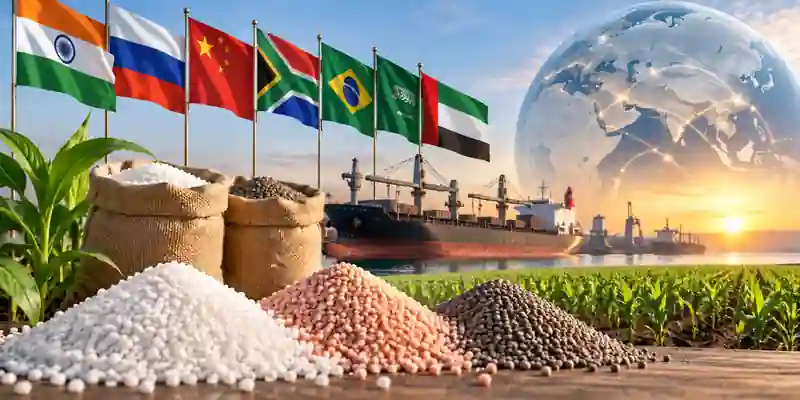
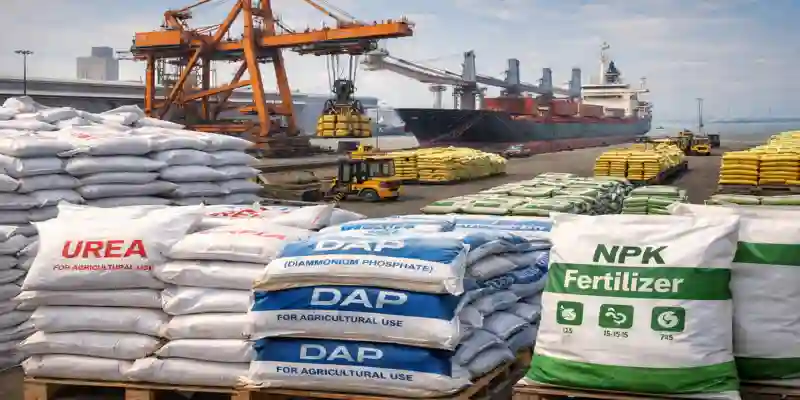
India sharply increased fertiliser imports during the first nine months of the current fiscal year, as higher overseas purchases helped bridge the gap created by lower domestic production. Provisional data released on Wednesday by the entity[“organization”,”Fertiliser Association of India”,”industry body india”] shows that urea imports jumped 85%, DAP imports rose 46%, and NPK fertiliser imports surged 122% compared with the same period last year.
Urea: Imports Rise as Domestic Production Declines
During the April–December period, urea sales in “India”, increased 3.8% year-on-year to 31.16 million tonnes, reflecting steady demand during key crop nutrition months. However, domestic urea production declined 3.2% to 22.44 million tonnes, creating a wider supply gap.
To maintain availability, India significantly stepped up urea imports, which played a critical role in meeting farmer demand during the peak fertiliser application season.
DAP Imports Cushion Softer Demand and Lower Output
Sales of di-ammonium phosphate (DAP) moderated to 8 million tonnes, down from 8.33 million tonnes a year earlier, indicating relatively softer offtake. Despite this, DAP imports increased by 45.7% to 5.95 million tonnes.
The higher imports offset a 3.9% decline in domestic DAP production, ensuring uninterrupted availability of phosphatic fertilisers across the country during the rabi and kharif seasons.
NPK and Complex Fertilisers See Strong Import Growth
The complex fertiliser segment showed a contrasting trend. Production of NP and NPK fertilisers (excluding DAP) rose 13.1% year-on-year to 9.27 million tonnes, supported by higher plant utilisation.
At the same time, imports of NPK fertilisers more than doubled to 3.29 million tonnes, reflecting a strategic effort to strengthen supply. Total sales remained broadly stable at 11.74 million tonnes, suggesting that policymakers and companies focused on improving nutrient availability and promoting balanced fertiliser use, rather than chasing short-term demand growth.
Outlook
The sharp rise in fertiliser imports highlights India’s continued dependence on global markets, particularly when domestic production softens. With demand remaining resilient, especially for urea and complex fertilisers, imports are expected to remain a key lever for ensuring supply security and supporting agricultural productivity in the near term.