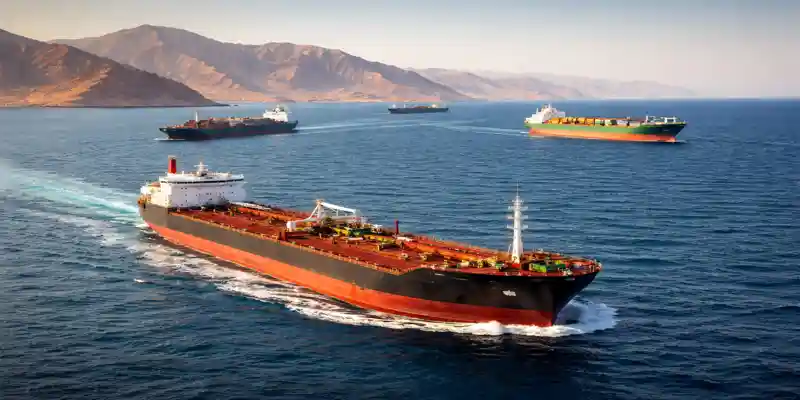
The Strait of Hormuz shipping activity has started to recover, with at least five vessels crossing the critical route in the last 24 hours. This development comes after days of disruption caused by Iran’s de facto restrictions on maritime movement.
Strait of Hormuz Shipping Activity Sees Rise in Vessel Movement
Shipping traffic through the Strait of Hormuz has shown a noticeable increase.
According to MarineTraffic, three dry bulk vessels — Zea, Glykofiloussa, and Neraki — crossed eastbound between Qeshm Island and Larak Island.
Market participants believe the Qeshm–Larak corridor may act as a controlled checkpoint for outbound vessels.
Hormuz Shipping Activity Expands to Tankers and Bulk Carriers
The Hormuz shipping activity is not limited to dry bulk vessels. The VLGC Niba transited eastbound, while the Supramax NJ Jupiter moved westbound.
Another VLGC, Salute, is currently heading towards the strait and is expected to cross soon.
However, concerns remain. Some vessels are turning off AIS transponders. For example, the container ship Rastanplan went dark near Kuhestak, raising transparency issues.
Strait of Hormuz Shipping Activity Still Below Normal Levels
Despite the recent improvement, Hormuz shipping activity remains below normal levels. Only two vessels crossed daily on 24–25 March, highlighting continued restrictions in the region.
This suggests that while traffic is improving, full normalization is still far away.
Iran Maintains Conditional Access to Shipping Activity
Iran’s Foreign Minister, Abbas Araqchi, confirmed that the waterway is not fully closed.
He stated:
“The Strait of Hormuz is not totally closed. It is only closed for our enemies.”
Iran is allowing passage for vessels linked to countries such as China, Russia, India, Iraq, and Pakistan.
Conclusion
The Hormuz shipping activity is gradually recovering but remains tightly controlled. The situation continues to evolve, and any escalation could disrupt global oil and gas supply chains.
Sources ;According to market sources and reports from Argus