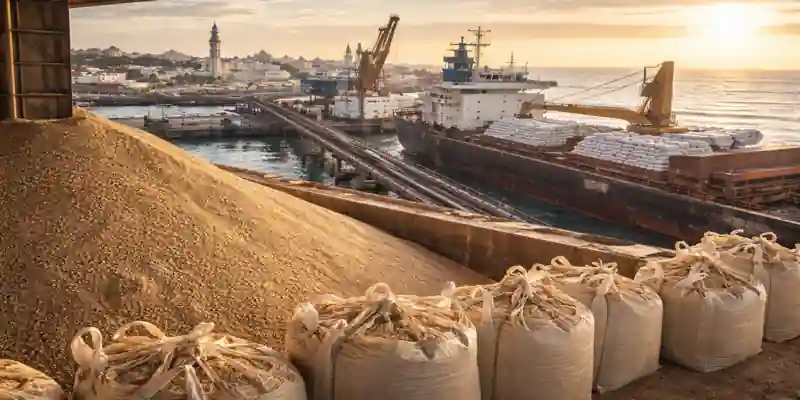
US phosphate fertilizer tariffs are once again under scrutiny as farmer groups urge the government to ease import restrictions. They argue that these tariffs are increasing costs and limiting access to critical fertilizers needed for crop production.
US Phosphate Fertilizer Tariffs Impact Crop Production
US phosphate fertilizer tariffs are raising concerns among farmers who depend on imports for key crops like corn and soybeans.
In a letter to the US Commerce Department, a coalition of farmers emphasized that phosphate fertilizers are essential for modern agriculture. These fertilizers are widely used to grow corn, soybeans, cotton, and other key crops.
The group stated that phosphate fertilizers help maintain crop yields, protect soil health, and ensure that US farmers remain competitive in both domestic and global markets.
US Phosphate Fertilizer Tariffs Origin and Trade Case
The issue began when The Mosaic Company filed a petition in 2020 against imports from Morocco and Russia.
The dispute dates back to 2020, when The Mosaic Company filed a petition. The company alleged that phosphate fertilizer imports from Morocco and Russia were subsidized and harming US producers.
Following the petition, the US Commerce Department imposed countervailing duties (CVDs) on Moroccan phosphate fertilizers.
US Phosphate Fertilizer Tariffs and Morocco Ruling
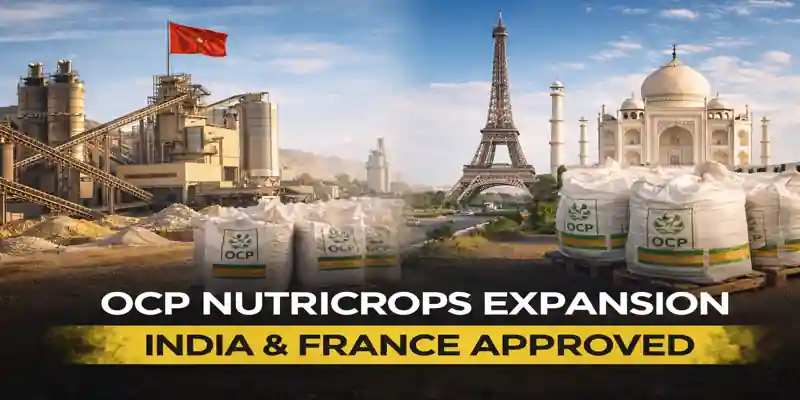
The ruling favored OCP Group, allowing lower tariffs of about 2.11% on Moroccan imports.
In March 2026, the US government withdrew its appeal against a trade court ruling. The court found that Morocco’s tax program was broadly applied and did not unfairly benefit exporters.
This decision supported OCP Group, allowing Moroccan fertilizers to enter the US market with reduced tariffs of about 2.11%. However, duties were not completely removed.
Farmers Say Tariffs Still Hurt Supply and Prices
Despite the reduced tariffs, US farmers argue that import duties continue to restrict supply and increase fertilizer costs.
They pointed out that the United States lacks sufficient domestic phosphate resources to meet its agricultural demand. As a result, imports remain critical.
Farmers warned that limiting imports leads to tighter supply and higher prices, which ultimately harm farmers, consumers, and the broader agricultural economy.
US Looks to Morocco Amid Global Supply Disruptions
The US government is actively exploring additional fertilizer imports from Morocco as global supply chains face disruptions. The ongoing geopolitical tensions, including the conflict involving Iran, Israel, and the US, have impacted traditional fertilizer trade routes.
Kevin Hassett stated that securing alternative fertilizer sources is part of a broader strategy to stabilize supply chains for US farmers.
Morocco’s Strategic Role in Global Fertilizer Supply
Morocco remains a key player in the global fertilizer market. The country holds around 70% of the world’s phosphate reserves and is one of the largest exporters of phosphate-based fertilizers.
This makes Morocco a crucial supplier for countries facing shortages and price volatility.
Conclusion
US phosphate fertilizer tariffs continue to be a contentious issue. While duties have been reduced, farmers argue that more relief is needed to ensure stable supply and affordable prices. With global disruptions intensifying, Morocco’s role in meeting US fertilizer demand is becoming increasingly important.