The US phosphate market is entering 2026 with mixed expectations for spring fertilizer demand. Market participants remain cautious after weak fall buying, even as improving affordability and strong corn acreage projections offer some support.
US growers sharply reduced phosphate purchases during the fall due to elevated prices. Although prices have started easing after the removal of import tariffs, traders are unsure how much demand will recover in the upcoming spring season.
High Prices Curbed Fall Phosphate Demand
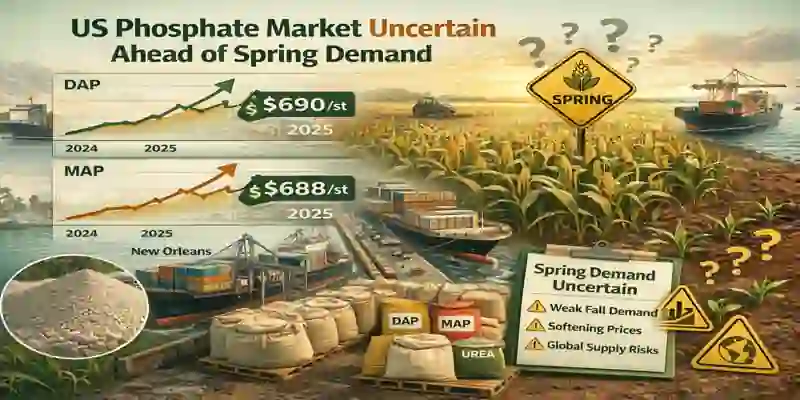
DAP and MAP prices in 2025 remained significantly higher than last year, particularly at the New Orleans (NOLA) port and inland markets. Import tariffs discouraged offshore suppliers, which tightened supply and pushed prices higher.
NOLA DAP prices averaged $690/st fob, up $128/st year-on-year
MAP prices averaged $688/st, up $78/st from 2024
As a result, many US growers minimized phosphate applications during the fall season.
Phosphate Imports Fell Sharply in 2025
US phosphate imports dropped sharply during the third quarter of 2025 due to higher prices and trade barriers.
July–September imports: 159,000 tonnes
Down 71% year-on-year
69% below the five-year average
However, including October–December vessel arrivals, total imports could reach 493,000 tonnes, only 51% lower than last year, according to Argus estimates.
Some traders believe that demand destruction of nearly 20% during the fall may have left sizable inventories in warehouses, potentially easing spring supply concerns.
Tariff Removal Brings Price Relief
The surprise removal of US phosphate import tariffs in November changed near-term market dynamics. Offshore suppliers quickly lined up vessels for winter deliveries, improving supply visibility ahead of spring planting.
As a result:
DAP prices fell to $616/st fob NOLA
MAP prices declined to $617.50/st fob
These lower prices could encourage some delayed buying, although traders remain cautious.
Spring Planting Outlook Supports Potential Demand
The US Department of Agriculture (USDA) expects around 95 million acres of corn to be planted in spring 2026. While this is lower than the 98.7 million acres in 2025, it remains well above 2024 levels of 91.5 million acres.
Growers who skipped phosphate applications in the fall will need to replenish soil nutrients before planting. According to Itafos president David Delaney, a demand rebound in 2026 appears inevitable despite recent weakness.
Global Supply Tightness May Limit Price Declines
The recent softening in phosphate prices could be short-lived due to tightening global supply conditions and rising input costs.
Key developments include:
Mosaic idling SSP production in Brazil due to higher sulfur prices
China planning to restrict phosphate exports until August 2026
Rising sulfur and ammonia costs globally
These factors could constrain supply during a critical procurement window for US buyers.
Producers May Cut Output Amid Cost Pressures
Higher feedstock costs increase the risk of production cuts by major phosphate producers. Mosaic and Nutrien may scale back marginal output if margins remain under pressure.
Nutrien is already conducting a strategic review of its phosphate assets, with conclusions expected in 2026. Limited Chinese exports and elevated production costs could keep prices firm, potentially restraining US grower demand despite the need to rebuild nutrient levels.
Market Outlook Remains Cautious
While spring demand could recover as growers compensate for skipped fall applications, affordability challenges and global supply risks continue to cloud the outlook. The US phosphate market is likely to remain balanced between improving demand fundamentals and persistent supply-side constraints.
Sources : Argus