
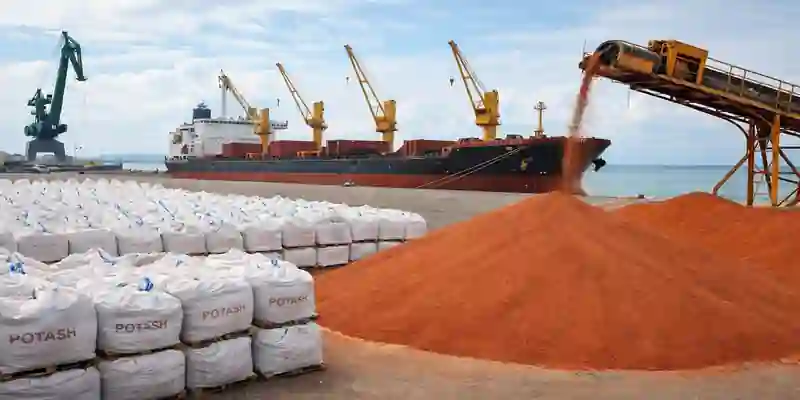
Global potash demand is expected to remain firm this year, according to Fertistream’s head of global market intelligence, Milton Sato. Speaking ahead of the Argus Fertilizer Latino Americano conference in Miami, Sato said global potash demand continues to benefit from favorable affordability and strong agricultural fundamentals.
Global Potash Demand Drivers in 2025
In 2025, seaborne trade of muriate of potash (MOP) increased by 2 million tonnes to around 53 million tonnes. This growth was mainly driven by improved affordability compared with other nutrients, measured by grains-to-fertilizer ratios. In addition, strong palm oil production in southeast Asia supported demand.
Indonesia and Malaysia together raised MOP imports by about 1.1 million tonnes to 4.5 million tonnes. However, the rapid pace of imports created some downward pressure on standard MOP prices during the fourth quarter.
At the same time, production curtailments announced by Belaruskali, along with rumors of Russian export limits, helped support the market.
Brazil Potash Imports Outlook for 2026
Brazilian MOP imports declined in the fourth quarter of 2025. However, Fertistream expects demand to remain stable or slightly higher in 2026, compared with the 13.5 million tonnes imported last year.
Low fourth-quarter imports and strong fertilizer application resulted in tight stock levels entering 2026. Moreover, Brazil has not yet purchased more than 80 percent of the fertilizers required for the upcoming soy crop. In addition, MOP barter ratios remain more favorable than those for other nutrients.
Growth of Water-Soluble Fertilizers in Latin America
Fertistream has started supplying water-soluble fertilizers to Latin America and is expanding its specialty portfolio in the region. The company sees strong growth potential, driven by climate variability and rising demand for high-purity and efficient fertilizers.
According to Sato, Fertistream considers Latin America a strategic market. Therefore, the company plans to expand its geographic reach, product offerings, and shipment volumes to strengthen its regional presence.
Impact of US Sanctions Changes on Belarusian Potash
Following the US announcement on 13 December lifting sanctions on Belarusian MOP, the US Treasury issued a general license allowing trade. If Belarusian Potash Company can restore payment channels, exports could resume within three to four months.
This development may support MOP prices by opening access to a key importing market. However, EU sanctions remain in place, and exports through Lithuania’s Klaipeda port continue to be blocked.
Fertilizer Opportunities in Africa
In Africa, demand for higher-value compounds and water-soluble fertilizers is emerging in select markets. Morocco and South Africa are developing water-soluble fertilizer usage, while Kenya relies on specialized NPK grades for tea cultivation.
Nevertheless, in many African countries, consumption of standard fertilizer products remains low. Limited financing, high logistics costs, and weak subsidy systems continue to restrict growth. Despite these challenges, Africa holds long-term potential for both commodity and specialty fertilizers.
Markets Supporting Global Potash Demand Growth
Over the next three to six months, Fertistream expects strong demand across major markets, including the US, Brazil, China, India, and southeast Asia. Improved affordability compared with other nutrients continues to support global potash demand across these regions.