
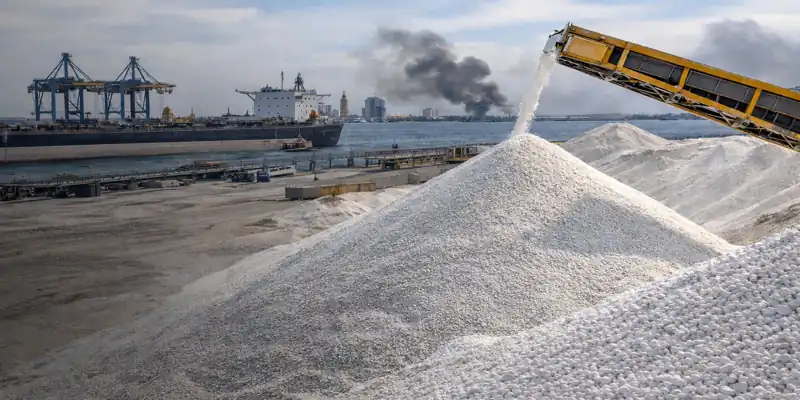
The USA phosphate market is facing intense pressure as exports surge while the Middle East conflict disrupts global fertilizer trade flows. Prices have climbed to their highest levels since 2022, raising concerns about affordability for farmers.
The situation worsened due to disruptions at the Strait of Hormuz, a key transit route for fertilizers like urea, ammonia, sulfur, and phosphates. This has tightened global supply and triggered political reactions, including comments from Donald Trump.
USA Phosphate Market Tightens as Exports Increase
The USA phosphate market has seen a sharp rise in exports during the first quarter. This has reduced domestic availability at a time when demand is increasing ahead of the spring planting season.
Leading producer Mosaic Company exported around 201,000 metric tons of DAP and MAP between January and March. This is significantly higher than the same period last year, according to US Census Bureau data.
In addition, traders have been re-exporting imported phosphate volumes from New Orleans (NOLA), further tightening domestic supply.
US Phosphate Market Faces Supply and Price Pressure
The US phosphate market is also being impacted by rising feedstock costs, particularly for sulfur and ammonia. This has reduced production in key global markets such as China, Morocco, South Africa, and India.
Export prices are currently higher than domestic levels. For example:
- International prices: $865–900 per ton (CFR)
- US NOLA prices: ~$842 per ton (CFR equivalent)
This price gap has encouraged producers to prioritize exports over domestic sales.
US Phosphate Market Draws Antitrust Scrutiny
The US phosphate market is under increasing regulatory scrutiny. The US Department of Agriculture and the US Department of Justice are investigating competition in fertilizer markets.
Major companies under review include:
- Nutrien
- Mosaic Company
- CF Industries
- Koch Industries
- Yara International
Officials have raised concerns about market concentration. USDA Deputy Secretary Stephen Vaden described the industry as a “duopoly,” suggesting limited competition may be driving higher prices.
Trade Policies Add to US Phosphate Market Challenges
The US phosphate market is also affected by trade policies. Over 60 grower groups have urged the government to remove countervailing duties (CVDs) on phosphate imports from Morocco and Russia.
Farmers argue that these duties limit supply options and increase costs. However, US producers like Mosaic Company and Simplot Company support maintaining these tariffs.
US Phosphate Market Outlook Remains Uncertain
The US phosphate market is expected to remain volatile in the near term. Ongoing geopolitical tensions, supply disruptions, and regulatory scrutiny continue to shape price trends.
For farmers, the combination of high input costs and limited supply remains a major concern ahead of the planting season.