Indian renewable ammonia developer AM Green has won the Asian lot in the second round of Germany’s H2Global programme, securing a long-term agreement to supply renewable ammonia from the second phase of its Kakinada project in Andhra Pradesh.
H2Global’s implementing agency Hintco selected AM Green as the sole winner of the Asia lot. The agreement has a minimum value of €585 million over 10 years, with deliveries expected to begin in 2029.
The deal strengthens India’s position as a potential supplier of renewable ammonia to the European market.
AM Green Renewable Ammonia Deal Covers 10 Years
Under the agreement, AM Green will supply renewable fuels of non-biological origin (RFNBO) ammonia to Germany.
The minimum contract value is €585 million, equivalent to approximately €58.5 million per year over the 10-year period.
However, Hintco has not disclosed the contracted annual volume or delivered price.
The agency also said it may purchase additional volumes using proceeds generated from sales into the European market through separate buy-side auctions.
H2Global Programme Selects AM Green for Asia
The award forms part of the second H2Global auction round, which opened in 2025 with €2.5 billion in funding.
The programme included separate procurement lots covering:
- Asia
- Africa
- North America
- South America and Oceania
Bidding rounds closed in March 2026, while Hintco expects to publish the complete auction results for the other regional lots later this year.
The first H2Global auction was held in 2022-23, with UAE-based fertiliser company Fertiglobe selected as the sole winner.
Kakinada Ammonia Project to Supply Germany
AM Green took a final investment decision on its Kakinada project in 2024.
The company plans to develop 500,000 tonnes per year of renewable ammonia capacity in the first phase and double production capacity in the second phase.
Production from the first phase is already covered by a binding offtake agreement with German utility Uniper.
Therefore, the new H2Global agreement provides an additional route to market for production from the project’s second phase.
AM Green Deal Could Cover Part of Phase Two Output
The €585 million minimum value of the agreement is significant, but it may cover less than 20% of the planned production from Kakinada’s second phase, depending on the final delivered price and production costs.
India’s domestic renewable ammonia tender provides an indication of potential pricing.
Winning bids in that tender ranged from ₹49.75 to ₹64.74 per kg, equivalent to approximately $519-$675 per tonne or €457-$595 per tonne.
At those prices, the annual H2Global value of around €58.5 million could correspond to roughly 98,300-128,000 tonnes per year before accounting for international freight.
Freight and RFNBO Costs Could Change Economics
Shipping renewable ammonia from India to Germany would add transportation costs.
If freight is assumed at around $200 per tonne, equivalent to approximately €176 per tonne, the potential annual volume supported by the agreement could fall to around 75,900-92,400 tonnes based on India’s domestic tender prices.
There is another important factor: the H2Global supply must meet RFNBO requirements.
RFNBO-compliant renewable ammonia can have higher production costs than conventional renewable ammonia because of additional requirements related to renewable electricity and sustainability criteria.
Argus estimates India’s RFNBO-compliant production cost at around $800 per tonne, or approximately €705 per tonne.
At this production-cost level, and assuming $200 per tonne in freight, the €58.5 million annual contract value could correspond to approximately 66,400 tonnes per year.
These figures are indicative calculations rather than disclosed contract volumes.
Kakinada Project Uses Renewable Power and Electrolysers
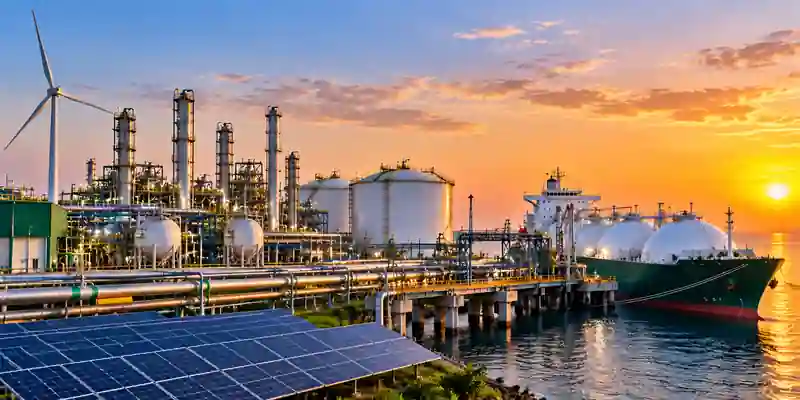
AM Green is converting an existing gas-based ammonia and urea complex at Kakinada into a renewable ammonia production facility.
The project will use alkaline electrolysers supplied by Belgian technology company John Cockerill’s Chinese branch.
The electrolysers will be powered by renewable electricity, with pumped-hydro storage supporting the power supply.
This configuration is intended to enable production of renewable ammonia that can meet the requirements of international buyers seeking lower-carbon fertiliser and chemical feedstocks.
AM Green Strengthens India’s Green Ammonia Export Potential
The H2Global award gives AM Green a long-term European market opportunity for renewable ammonia from its planned Kakinada expansion.
The agreement also adds to India’s emerging role in the global renewable ammonia market, particularly as European buyers seek alternative supplies that meet RFNBO requirements.
For AM Green, the next key milestones will include development of the second phase of the Kakinada project, renewable power integration and finalisation of the commercial and logistical arrangements required to deliver ammonia to Germany from 2029.
The AM Green renewable ammonia agreement therefore provides an important additional offtake pathway for India’s expanding renewable ammonia industry.