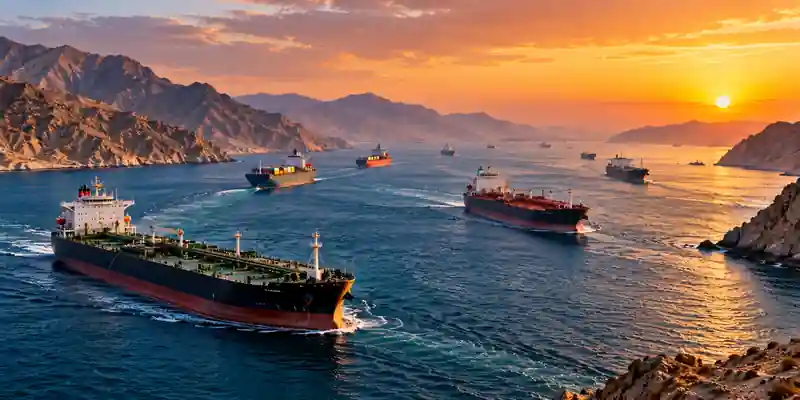
Strait of Hormuz vessel traffic remained unchanged on Tuesday, with 17 vessels transiting the strategic waterway despite heightened tensions and continued attacks on ships.
According to maritime security firm Windward, six vessels entered the strait while 11 vessels transited outward.
Overall traffic remains significantly below normal levels, highlighting the continued disruption to one of the world’s most important energy shipping routes.
Strait of Hormuz Vessel Traffic: 17 Ships Transit
Of the 17 vessels recorded on Tuesday, six were inbound and 11 were outbound.
Inbound vessels were divided equally between Iran’s preferred northern corridor and the southern route supported by the United States.
Among outbound vessels, five used the northern corridor, five took the southern route and one vessel used the high-risk central corridor.
The vessel movements were as follows:
| Direction | Vessels | Route details |
|---|---|---|
| Inbound | 6 | 3 northern, 3 southern |
| Outbound | 11 | 5 northern, 5 southern, 1 central |
| Total | 17 | All routes |
Tankers Continue to Use the Strait of Hormuz
The types of vessels using the waterway also highlight the importance of the strait to energy and commodity markets.
Inbound traffic consisted of:
- Two tankers
- Two cargo ships
- Two bulk carriers
Outbound traffic included:
- Six tankers
- Five cargo ships
The continued movement of tankers is particularly significant because the Strait of Hormuz is a major route for global oil and gas shipments.
Attacks on Vessels Continue
Shipping activity remains under pressure as attacks on vessels continue.
According to the UK Maritime Trade Operations (UKMTO), three incidents involving tankers were reported on September 30.
A day earlier, UKMTO reported that a Kuwaiti very large crude carrier (VLCC) was struck by an unidentified projectile.
Four reported attacks during the week account for nearly 10% of the 42 cumulative strikes recorded since early July.
The continued incidents have increased the security risks faced by commercial vessels operating through the waterway.
Hormuz Shipping Remains Far Below Normal
Despite 17 vessels transiting on Tuesday, overall Strait of Hormuz vessel traffic remains at only around 13% of the pre-war average.
The waterway previously handled approximately 135 vessel transits per day.
At current levels, traffic remains dramatically below its normal operating pattern.
This reduction is important for global energy markets because the strait connects major Middle Eastern oil and gas exporters with international buyers.
Why Strait of Hormuz Traffic Matters
The Strait of Hormuz is one of the world’s most strategically important maritime chokepoints.
A sustained reduction in vessel traffic can affect the movement of crude oil, petroleum products, LNG and other commodities.
For energy markets, the key issue is not only how many vessels are currently transiting the strait but also whether shipping companies can maintain reliable and safe operations.
Continued attacks could further influence routing decisions, insurance costs, freight rates and the availability of vessels willing to enter the high-risk area.
Strait of Hormuz Vessel Traffic Outlook
For now, vessel traffic remains at a fraction of its pre-war level, while commercial ships continue to face security risks.
Tuesday’s 17 transits were unchanged from the previous day, suggesting that shipping activity has yet to show a significant recovery.
The next major indicator for energy and freight markets will be whether daily vessel movements begin to rise or remain close to the current 13% of normal levels.