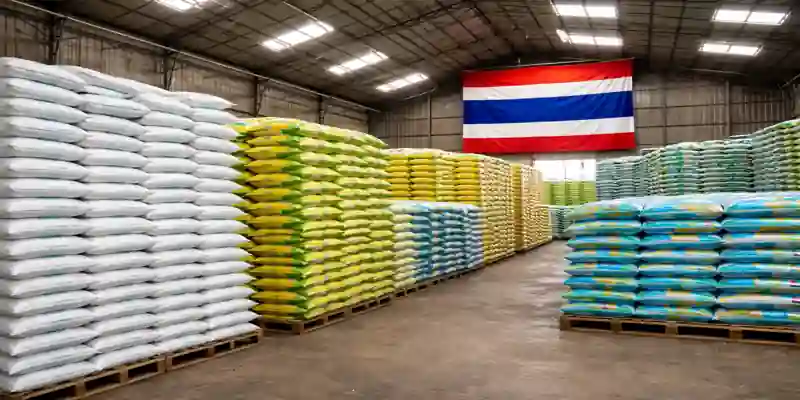
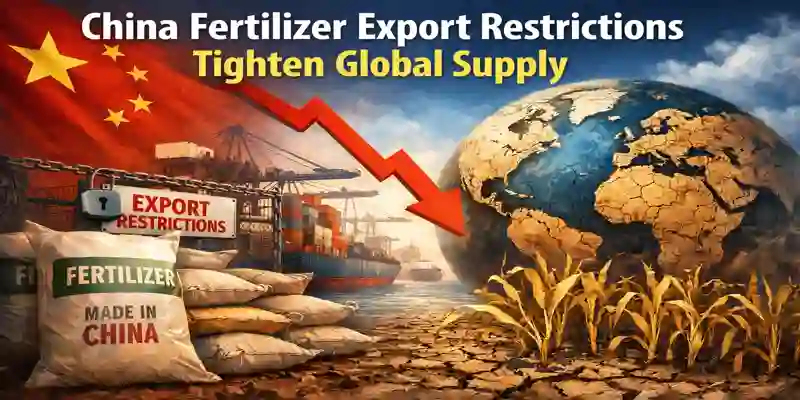
China fertilizer export restrictions are tightening as authorities move to control outbound shipments amid rising global uncertainty. Officials have asked exporters to halt shipments of nitrogen-potassium fertilizer blends while continuing existing limits on urea exports.
Measures aimed at protecting domestic supply
The China fertilizer export restrictions are designed to protect domestic availability and stabilize prices ahead of the spring planting season. This is a crucial period when fertilizer demand peaks across the country’s large agricultural sector.
Most fertilizer exports effectively paused
According to sources, the latest directives have effectively paused overseas shipments of most fertilizer types, including compound fertilizers that were still being exported after earlier relaxations. However, ammonium sulfate remains an exception and continues to be exported, accounting for a significant share of shipments.
Middle East conflict adds pressure on markets
The tightening of China fertilizer export restrictions comes as the conflict in Iran disrupts fertilizer production and trade flows from a key global hub. This disruption has triggered a sharp rise in global prices.
Urea prices surge amid supply concerns
In China, urea prices have increased significantly, rising nearly 40% since the start of the conflict. Farmers across the US, Asia, and Europe are rushing to secure supplies, fearing further shortages.
Global demand intensifies, India seeks supplies
With supply tightening, countries are actively seeking alternatives. Indian officials have approached China to request urea shipments as the ongoing conflict affects gas supplies and domestic fertilizer production.
Conclusion
Overall, fertilizer export restrictions are reshaping global fertilizer markets. While the measures aim to secure domestic needs, they are also contributing to rising prices and increasing uncertainty for farmers worldwide.