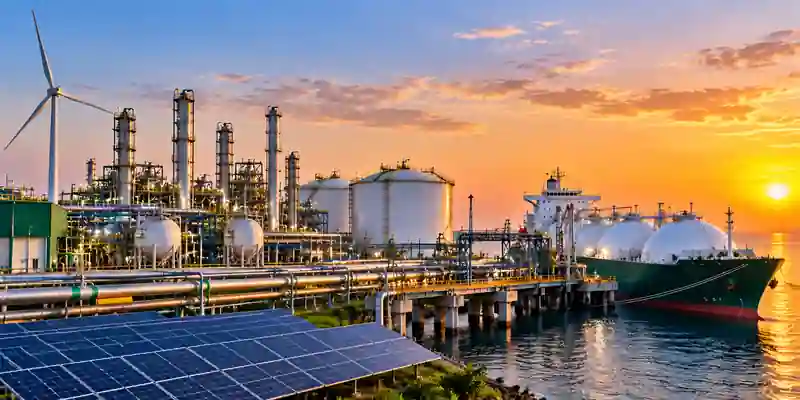
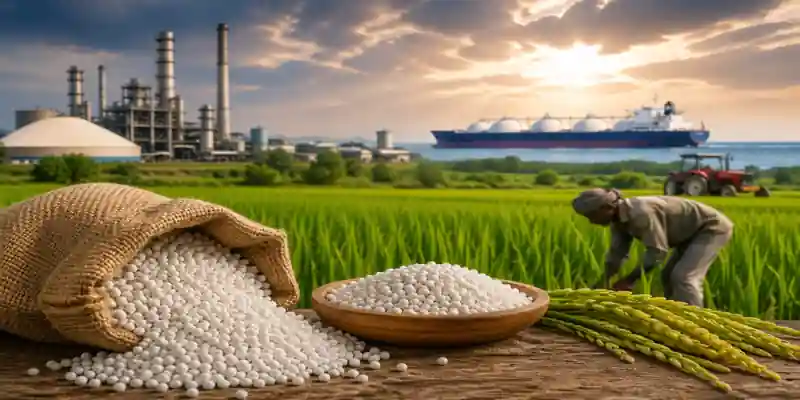
Fertilizer Supply Crisis India highlights growing risks of food inflation despite a massive USD 18.6 billion subsidy planned for FY2026-27. Global supply disruptions, mainly due to the ongoing US-Iran conflict, are creating uncertainty ahead of the Kharif sowing season.
According to FAO Chief Economist Maximo Torero, prolonged tensions in the Gulf region could increase import costs and reduce fertilizer availability in India. This may directly impact prices of key crops like wheat, rice, and vegetables.
India remains highly dependent on the Gulf for fertilizer supplies, with nearly 35% of imports coming from the region. Any disruption in the Strait of Hormuz could severely affect supply chains. In addition, domestic fertilizer plants are operating at only 60% capacity due to gas allocation limits.
Global fertilizer prices have already surged by 50–80%. Higher energy costs are increasing production expenses, as natural gas is a key input for nitrogen fertilizers. Farmers facing rising costs may reduce fertilizer usage, which can lower crop yields.
Weather conditions may worsen the situation further. There is a 60% chance of below-normal monsoon in 2026, which could impact Kharif production. Experts warn that if supply disruptions last beyond 60 days, the impact on agriculture and food prices could become severe.
Globally, fertilizer trade is also under pressure. The blockade of the Strait of Hormuz has disrupted millions of tonnes of fertilizer shipments each month. Shipping costs have increased sharply, causing delays and higher prices.
In summary,Fertilizer Supply Crisis India signals a challenging outlook. Continued supply disruptions, rising costs, and weather risks could drive food inflation and impact overall economic growth in the coming months.