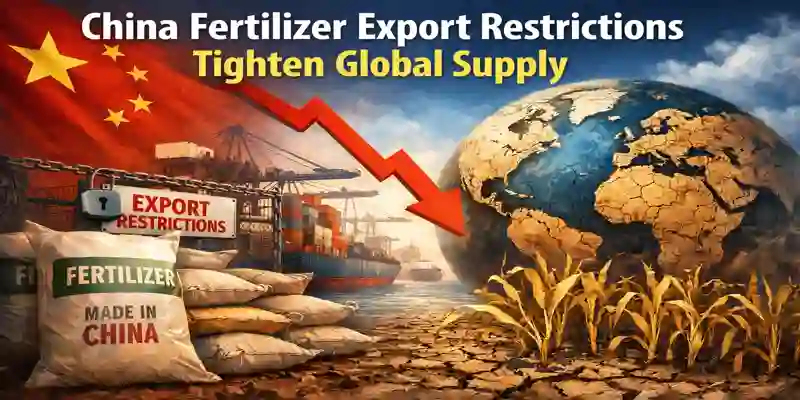

US fertilizer prices are rising sharply as global supply disruptions intensify due to geopolitical tensions in the Middle East. Farmers across the United States are now facing mounting financial pressure ahead of the spring planting season.
Rodney Bushmeyer, a farmer in Illinois, has experienced the impact firsthand. His family-run Bushmeyer Farms, established over a century ago, is struggling with rising input costs and falling crop prices.
Strait of Hormuz Crisis Disrupts Fertilizer Supply
The ongoing conflict involving the US, Israel, and Iran has disrupted global trade routes. The Strait of Hormuz, a key corridor for fertilizer shipments, is facing serious disruptions.
A large share of global fertilizer and raw material supply passes through this route. As shipments slow down, prices have surged globally.
Fertilizer Prices Double as Grain Prices Fall
According to reports, fertilizer prices have doubled in some cases. At the same time, grain prices have declined, creating a difficult situation for farmers.
Matt Bennett, CEO of AgMarket, said farmers have been losing money for several years. The current price spike has made the situation worse.
US Relies Heavily on Fertilizer Imports
The United States depends on imports for nearly 25% of its fertilizer consumption. The Middle East remains a key supplier of urea and phosphate fertilizers.
Nitrogen prices have increased significantly. They rose from around $350 per ton in late December to nearly $600 per ton by mid-March.
Farmers Struggle to Cover Rising Costs
Many farmers are facing input costs that exceed their crop earnings. Without federal subsidies, several farms would have already suffered major losses.
The US Department of Agriculture (USDA) has projected another year of lower profits. This adds further uncertainty to the agricultural sector.
Shift in Crop Choices Expected
Rising fertilizer prices may change planting decisions. Farmers could shift from corn to soybeans, as soybeans require less fertilizer.
The USDA’s upcoming planting survey may show a major shift in crop acreage. This could impact global agricultural markets in the coming months.
Why This Matters
The surge in US fertilizer prices highlights the strong link between geopolitics and agriculture. Supply disruptions in key regions can directly impact farmers, food production, and global markets.