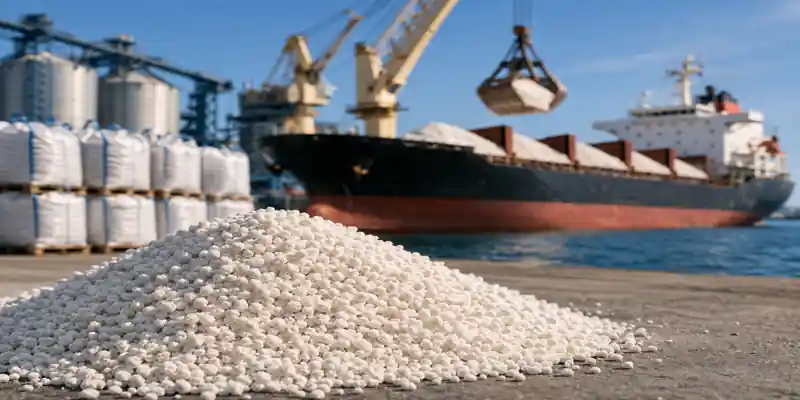
India is witnessing a sharp rise in fertilizer imports, which is now a major contributor to the country’s widening trade deficit along with gold. Recently released trade data reveals a steep jump in fertilizer imports during the current fiscal year.
India’s merchandise trade deficit hit a record $41.68 billion in October. The higher import bill for non-oil items such as fertilizers and gold increased pressure on the external sector. The cumulative import of fertilizers between April and October has surged 82% year-on-year, reflecting strong domestic demand.
From July to October alone, India imported fertilizers worth $8.09 billion, a massive 143.67% increase over the same period last year. This jump is mainly due to record urea imports in a very short window. Official data shows urea imports surged 228% during July–October to 49.79 lakh tonnes, compared to 15.16 lakh tonnes last year.
The domestic fertilizer stock remains low despite strong Rabi demand. With more area under paddy and maize due to a good monsoon, the government rushed to secure supplies. India imported 60 lakh tonnes of urea within 2–3 months, while the entire year’s import in 2024–25 was only 56.47 lakh tonnes.
Global prices have also climbed. Imported urea now costs $400–$410 per tonne (CFR), compared to $362/tonne (FOB) in November 2024. DAP prices have increased to $680–$700 per tonne, versus $634 per tonne last year. In August, urea touched $530 per tonne before correcting after China relaxed export restrictions.
Industry experts caution that the timing of imports made India buy when global prices were high. “The main import period began in July when prices were at peak. The import strategy needs a redesign to reduce the trade gap,” said an industry official.
Meanwhile, the Fertilizer Ministry has stopped sharing monthly data on production, imports, sales, and subsidies since July, which many believe contributed to supply concerns and speculation.
Despite challenges, the latest import shipments improved stock levels as of November 1:
Urea: 50.54 lakh tonnes (vs 68.16 LT last year)
DAP: 19.05 LT (vs 11.52 LT last year)
MOP: 7.33 LT (vs 7.41 LT last year)
Complex fertilizers: 36.21 LT (vs 31.13 LT last year)
To curb excessive procurement of subsidized fertilizers, the government continues the cap of 50 bags per buyer per month. District administrations are also monitoring top buyers to prevent misuse and diversion.
As India balances fertilizer availability with trade stability, managing imports strategically will be critical for the farm sector and the country’s economic health.