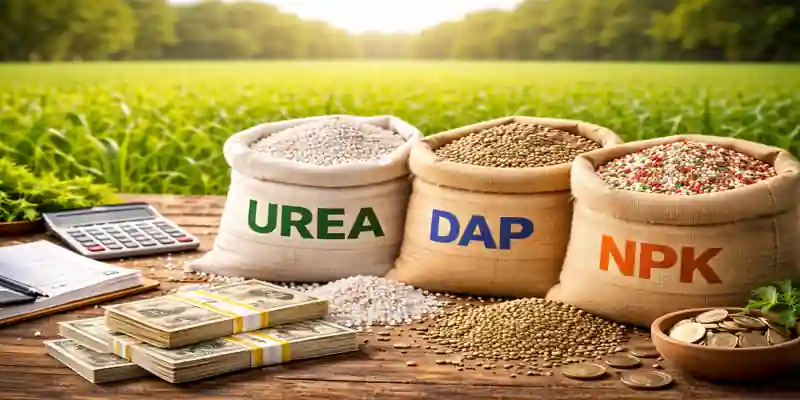
India fertilizer subsidy 2026 may increase again if global gas prices remain high. The government has estimated the subsidy at ₹1.71 trillion for the next financial year. However, rising LNG prices and higher imports could change that calculation.
The real issue is not only geopolitical tension. The bigger concern is India’s growing dependence on imported gas and fertilizers.
Why Gas Prices Matter So Much
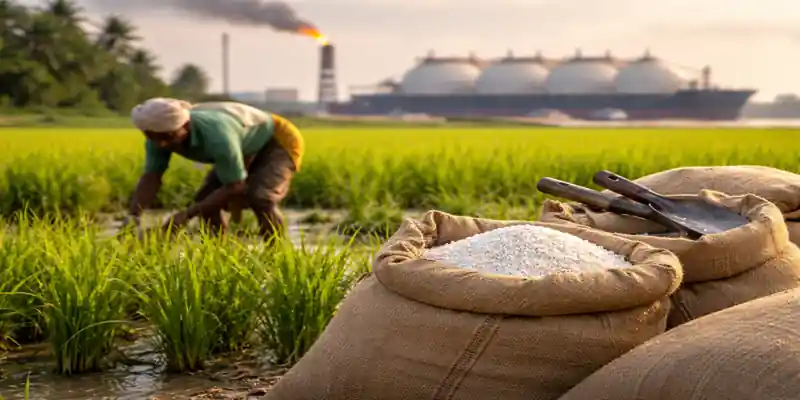
Natural gas is the main raw material used to produce urea. It accounts for nearly 75–80% of production cost.
If LNG prices increase by 15–20%, urea production becomes more expensive. But farmers still buy urea at fixed government prices. So the extra burden falls on the government in the form of higher subsidy.
This makes the fertilizer subsidy directly linked to global energy markets.
Imports Are Rising Fast
India produced around 30.6 million tonnes of urea in FY25. But domestic output alone is not enough.
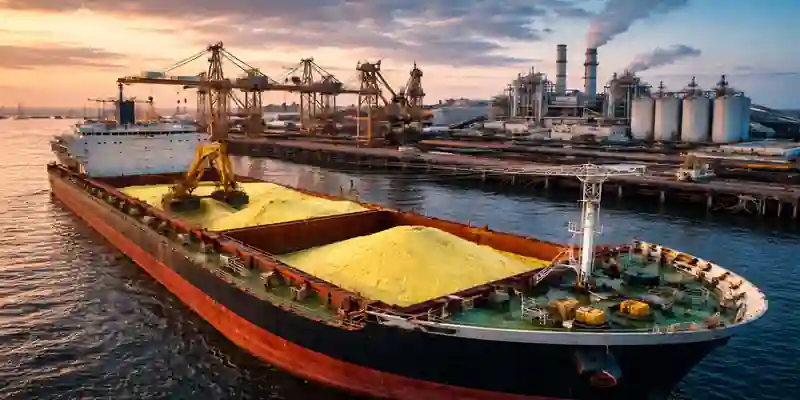
During April–December 2025, urea imports jumped more than 85% to around 8 million tonnes. This sharp rise shows India is still dependent on global suppliers.
When international prices rise, import costs increase. When gas prices rise, domestic production costs increase. Both situations push the subsidy bill higher.
Shipping and Freight Add More Risk
Uncertainty in West Asia has increased freight and insurance costs. Even without a complete disruption, shipping routes like the Strait of Hormuz remain sensitive.
Higher freight costs directly increase fertilizer import prices. This again adds pressure on subsidy spending.
We Have Seen This Before
In FY23, global ammonia and phosphoric acid prices surged. As a result, India’s fertilizer subsidy touched nearly ₹2.5 trillion.
That episode showed how quickly global price shocks can impact India’s budget.
If crude and LNG prices remain strong for a long period, India fertilizer subsidy 2026 may also cross current estimates.
Short-Term Relief, Long-Term Questions
Industry sources say fertilizer stocks are currently adequate. The off-season before Kharif sowing also keeps demand moderate for now.
But the bigger question remains:
Can India reduce its LNG dependence?
Should subsidy reforms be accelerated?
Can domestic gas production improve stability?
India fertilizer subsidy 2026 is not just about supporting farmers. It is now closely linked to energy security, global trade routes, and fiscal stability.
If energy markets remain volatile, the government may have to revise its subsidy allocation again.