India’s parliamentary Standing Committee on Chemicals and Fertilisers has recommended large-scale Nano Fertilizer Field Trials to thoroughly assess the performance, safety and long-term impact of nano urea and nano DAP on Indian agriculture. The recommendation came as part of a detailed report on strengthening domestic fertiliser self-sufficiency and reducing import dependence.
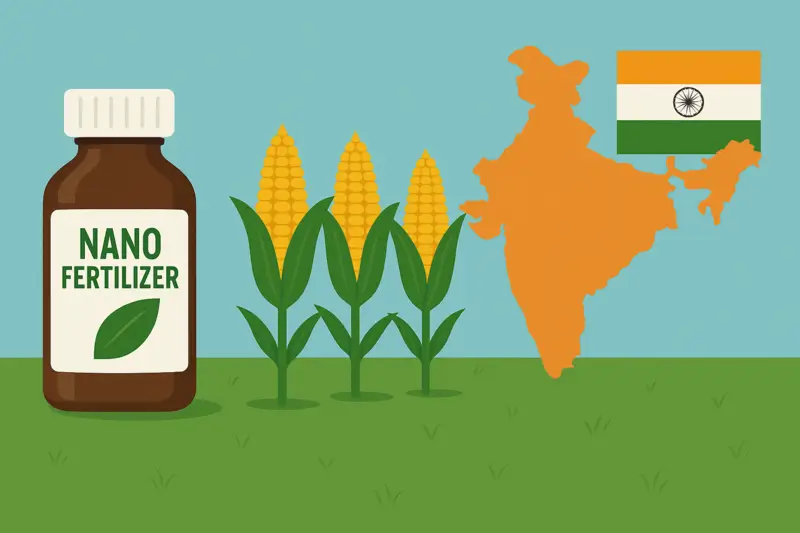
The committee noted that nano-fertilisers—especially nano urea and nano DAP—are emerging as promising alternatives to conventional granular fertilisers. These products, supplied in small bottles and priced lower than traditional urea and DAP, have already gained wide acceptance among farmers. However, the panel emphasised that extensive Nano Fertilizer Field Trials are essential to validate their effectiveness on different crops, agro-climatic zones, soil types, and farming systems.
Panel Recommends Production Boost and Full Policy Support
The committee urged the Department of Fertilizers to take concrete steps to accelerate production of nano fertilisers. Since nano products require significantly smaller quantities of raw materials, expanding manufacturing capacity could reduce the country’s reliance on imported urea and P&K fertilisers while improving overall fertiliser efficiency.
It recommended full policy support, financial incentives and strategic planning to help scale up nano fertiliser production manyfold in the coming years.
Nationwide Field Trials and Farmer Awareness Campaigns
To ensure adoption is scientifically validated, the panel asked the department to carry out long-term Nano Fertilizer Field Trials in collaboration with agricultural universities, research organisations and Krishi Vigyan Kendras (KVKs). These trials must assess crop yield, nutrient quality, soil health effects and overall productivity before recommending large-scale replacement of conventional fertilisers.
Additionally, the committee called for strong farmer-awareness campaigns and increased use of drones for nano-fertiliser application to improve efficiency.
Rapid Growth in Nano Fertiliser Usage
Nano urea has already shown strong market acceptance, with 9.32 crore bottles sold over the past two and a half years—equivalent to 42 lakh tonnes of conventional urea. Likewise, nano DAP adoption is rising fast, with 2.16 crore bottles sold, replacing the need for approximately 10.82 lakh tonnes of imported DAP.
The committee expressed confidence that, with extensive Nano Fertilizer Field Trials and accelerated production, India can significantly reduce fertiliser imports and move closer to long-term self-sufficiency.