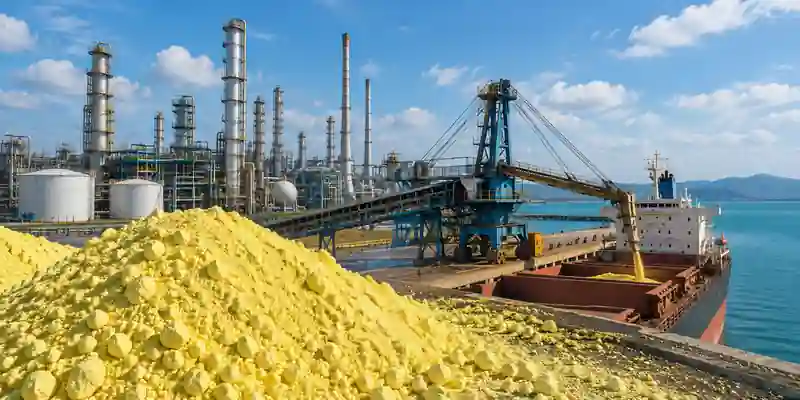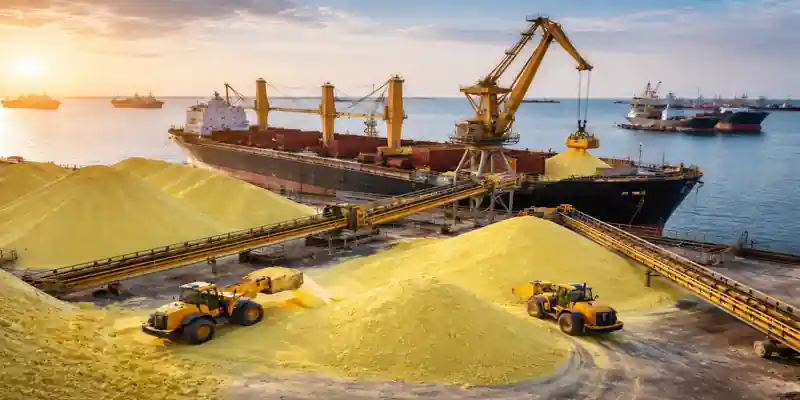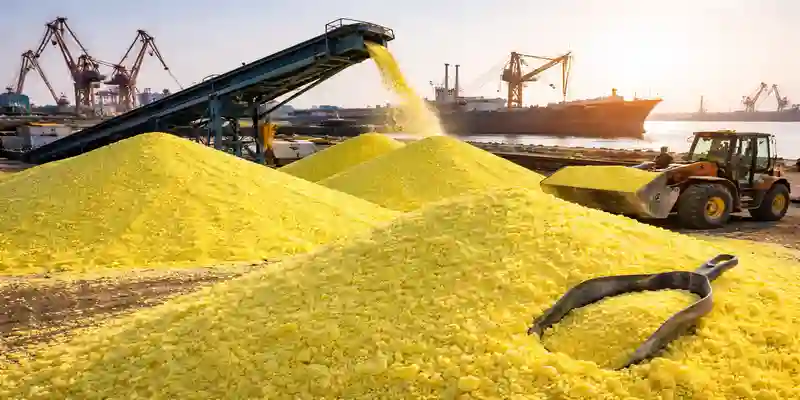
US sulfur fertilizer markets are facing renewed pressure as government agencies explore measures to encourage Gulf Coast refiners to keep more sulfur in the domestic market for phosphate fertilizer production.
US Department of Agriculture (USDA) Deputy Secretary Stephen Vaden said the USDA is working with the US Department of Transportation to examine ways to lower domestic sulfur transportation costs and create incentives for refiners to supply more material to US fertilizer producers.
The initiative comes after disruptions to major international supply routes pushed sulfur prices sharply higher and placed additional pressure on phosphate fertilizer production.
US sulfur prices surge as global supplies tighten
US refiners produce sulfur as a byproduct of petroleum refining. However, the disruption of major global supply routes, including the Strait of Hormuz, has changed traditional trade flows.
With several major international supply sources affected, US refiners have had greater incentives to export sulfur, reducing the availability of competitively priced material for domestic fertilizer manufacturers.
US Gulf spot sulfur prices were around $1,000-$1,050 per tonne FOB last week, compared with approximately $280-$290/t during the same period in 2025. Prices were also significantly higher than the $500-$510/t level recorded in early January 2026.
The sharp increase has raised production costs for phosphate fertilizer manufacturers.
Government considers rail incentives for sulfur
The USDA is working closely with the US Department of Transportation on potential measures to improve the domestic movement of sulfur.
One proposal involves greater use of railroad infrastructure to transport sulfur from Gulf Coast refineries to fertilizer plants.
According to Vaden, officials are also examining ways to transport molten sulfur domestically without requiring fertilizer plants to remelt the material before use.
Sulfur produced by Gulf Coast refineries is generally available in molten form and can be transported by rail, truck or, in some cases, barges. Imported sulfur is often supplied as granular or prilled material and may require remelting.
Maintaining the required temperature during transportation is therefore an important logistical consideration.
Fertilizer producers discuss domestic sulfur supply
Government officials are discussing possible measures with several domestic fertilizer companies.
The initial focus is reportedly on reducing rail transportation costs, although the details of any final programme have not yet been confirmed.
The proposed measures are not expected to immediately resolve high sulfur prices. However, officials believe that improved transportation and domestic supply arrangements could help address sulfur-related constraints affecting the fertilizer industry over the next two years.
Other potential approaches discussed by market participants include financial incentives for refiners or government support to reduce the effective cost of sulfur for fertilizer producers.
High sulfur costs pressure phosphate production
Elevated sulfur costs have become a significant challenge for phosphate fertilizer manufacturers in the US and other major producing regions.
Mosaic, a leading US phosphate fertilizer producer, reduced production at several Florida facilities earlier this year and idled phosphate production at its Faustina facility in Louisiana.
International producers have also faced pressure from higher sulfur costs. Morocco-based OCP has reduced production rates as expensive sulfur has affected phosphate fertilizer economics.
Mosaic has said that retaining more sulfur for domestic fertilizer producers could help strengthen US agricultural supply chains.
North America has sufficient sulfur production
Some market participants argue that the US sulfur market is not facing a fundamental shortage of physical material.
North America produces approximately twice as much sulfur as it consumes, meaning the key issue is currently price and affordability rather than overall availability.
Lower transportation costs could therefore make it more attractive for refiners to sell sulfur domestically instead of exporting it.
However, some industry participants have expressed concern that direct government intervention through price controls or subsidies could eventually lead to wider regulation of other fertilizer inputs.
Lawmakers call for action on sulfur affordability
The impact of high sulfur prices has also attracted attention from US lawmakers.
A group of Florida lawmakers recently called on the US government to take coordinated action to address sulfur supply disruptions and affordability.
Florida is particularly important to the US phosphate industry because a large portion of Mosaic’s production is located in the state.
The lawmakers warned that persistently high fertilizer input costs could put additional pressure on farmers and, ultimately, agricultural production.
Outlook for the US sulfur fertilizer market
The proposed government measures highlight the strategic importance of sulfur to the domestic phosphate fertilizer industry.
Although North America has substantial sulfur production capacity, the current price environment is creating difficulties for fertilizer manufacturers. Lowering transportation costs and encouraging domestic sales could improve the economics of phosphate production.
The outcome will depend on the final structure of any government incentives and the response of refiners, fertilizer producers and logistics companies.
For the latest fertilizer prices, market developments and industry news, readers can also follow FERTILIZERFIELD.