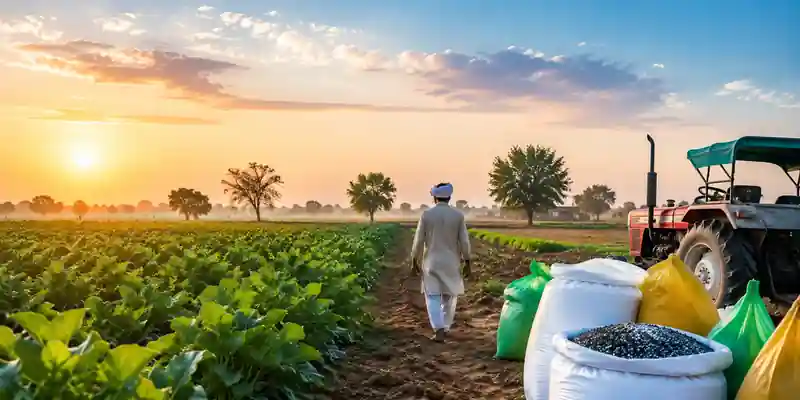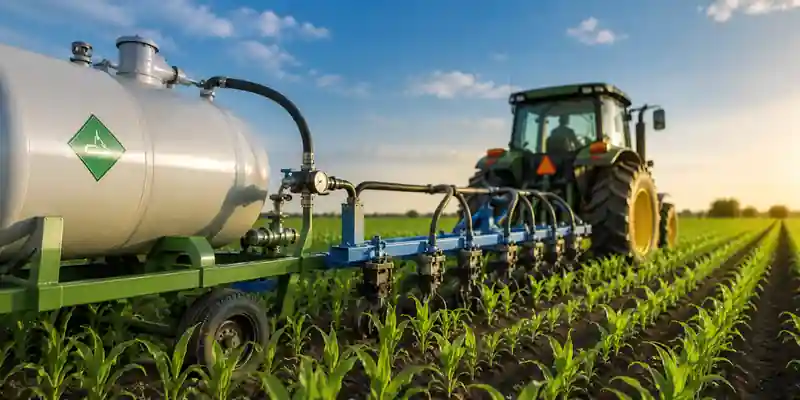
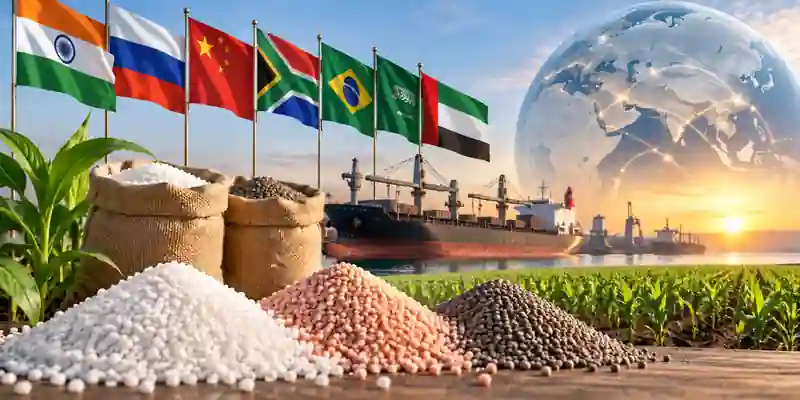
The BRICS fertilizer supply issue came into focus at the September 12-13 summit in New Delhi, as member countries discussed food security, supply disruptions and fertilizer shortages. India imports nearly 30% of its fertilizer requirements from overseas markets, increasing its exposure to global prices, freight costs and supply disruptions.
The New Delhi Declaration specifically highlighted the need to mitigate abrupt supply crises, including fertilizer shortages, and called for stronger cooperation on agricultural inputs and resilient supply chains.
BRICS highlights fertilizer supply security
BRICS leaders recognized that member countries are major contributors to global food production and have an important role in strengthening food security and agricultural productivity.
The declaration emphasized the importance of addressing food price volatility and sudden supply disruptions, including fertilizer shortages. It also supported further discussions on facilitating intra-BRICS trade in agricultural products and agricultural production inputs.
A senior official cited by Moneycontrol said member states should work toward ensuring adequate availability of fertilizers within the bloc, particularly during periods of crisis. Discussions on how this cooperation could translate into easier procurement between BRICS countries are still under development.
India’s fertilizer import dependence
The issue is particularly important for India because of its dependence on international fertilizer markets.
India consumes tens of millions of tonnes of fertilizers every year, while a significant portion of domestic demand is met through imports. DAP remains particularly import-dependent, with around half of India’s requirement being sourced from overseas markets in 2024-25, according to the report cited by Moneycontrol.
Global fertilizer markets have also experienced significant volatility in 2026. India has diversified sourcing from countries including Russia, Oman and Nigeria, while international urea prices have moved sharply during the year.
Russia has also emerged as an important fertilizer supplier for India. The Russian Fertilizer Producers Association said Russia supplied around 2.8 million tonnes of fertilizers to India during the first half of 2026.
Fertilizer subsidy burden rises
India’s fertilizer import exposure is also affecting the government’s subsidy bill.
Government spending on fertilizer subsidies had reached around Rs 99,000 crore by August 19, 2026, with expenditure already accounting for about 56% of the Budget Estimate during the first five months of FY27. Officials in the Finance Ministry cited by Moneycontrol estimate that the full-year fertilizer subsidy bill could reach around Rs 2.3-2.5 lakh crore.
That would put the subsidy requirement roughly Rs 60,000-80,000 crore above the Budget estimate, reflecting the impact of fertilizer prices, imports and broader market volatility.
BRICS AGRIN and agricultural cooperation
The BRICS summit also advanced cooperation on agricultural inputs through the proposed BRICS AGRIN (Agro-Inputs, Genetic Resources, and Information Network).
The New Delhi Declaration welcomed the establishment of the collaborative, non-binding and farmer-centric network. BRICS countries also backed continued discussions on a BRICS Grain Exchange and encouraged stronger cooperation on agricultural and food production inputs.
The bloc further supported networks focused on agroecology, regenerative agriculture and digital agriculture, aimed at improving agricultural productivity and climate resilience.
What the BRICS fertilizer initiative could mean for India
Closer fertilizer cooperation within BRICS could potentially provide India with additional channels for sourcing key nutrients during periods of global supply disruption. Russia and China are significant fertilizer-producing countries, while India is one of the world’s major fertilizer-consuming markets.
However, the practical details of any easier intra-BRICS fertilizer procurement mechanism are still being worked out. The immediate impact on India’s fertilizer imports, landed costs and subsidy expenditure will therefore depend on future agreements, global prices, freight rates and availability.
For India, the discussions underline the importance of diversifying fertilizer imports, strengthening domestic production and maintaining reliable international supply chains as global agricultural input markets remain volatile.