
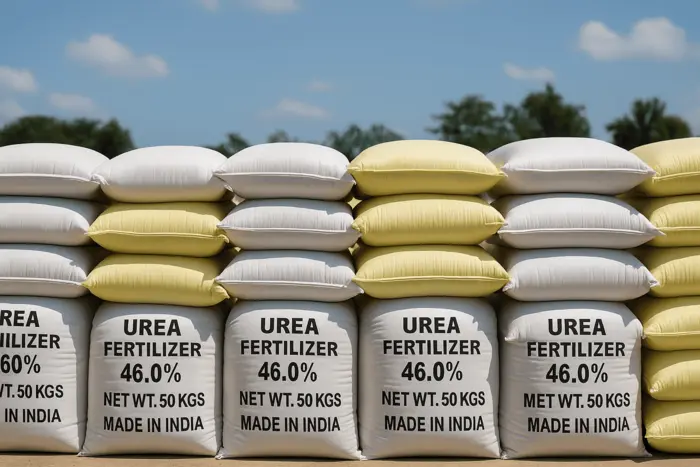
The fertiliser pilot project announced by the government is set to introduce major reforms by March-end, according to Fertiliser Secretary Rajat Kumar Mishra. A day after Minister J. P. Nadda informed Parliament about plans to link subsidised fertiliser sales with landholding, Mishra said several precise interventions will soon be rolled out to curb misuse and improve transparency. He also invited industry suggestions to stop diversion of subsidised urea into non-agricultural sectors.
Land-Linked Purchases Under the Fertiliser Pilot Project
During his statement in the Rajya Sabha, Nadda explained that the new fertiliser pilot project will connect fertiliser demand to the size of a farmer’s land. The goal is to prevent cases where farmers buying far more than they can use may be reselling or diverting subsidised stock. He gave an example: a farmer with capacity to use 10 bags often purchases 50 bags, leading to pilferage and black marketing.
Although farmers are currently free to buy unlimited bags, the government capped monthly purchases during the last kharif season to stabilise supply. Nadda added that shortages were exaggerated by hoarding and diversion rather than inadequate distribution.
Crackdown on Violations and Fixed Cost Revisions
Over the past seven months, authorities have cancelled 5,371 licences of fertiliser firms and registered 649 FIRs for diversion and malpractice. Mishra also said the government plans a long-awaited increase in fixed cost payments for 30 gas-based urea plants. These costs, which influence subsidy calculations and retail prices, have not been revised in 25 years.
Companies currently receive ₹2,800–₹3,000 per tonne plus an additional ₹350 per tonne added in 2020. However, industry leaders continue to push for a more realistic structure. FAI Chairman S. Shankarsubramanian said a timely revision is essential for sector viability and fresh investment.
FAI Backs DBT Linkage and Calls for Policy Reforms
The FAI chairman welcomed the government’s plan to link DBT benefits to landholding under the fertiliser pilot project. He said this step can promote balanced fertiliser use and help farmers make better decisions based on soil health.
However, he warned of rising energy costs, logistics pressures and compliance burdens, particularly for older urea units that still use outdated technology. He also raised concerns about the persistent imbalance in NPK usage, which has weakened soil fertility and reduced fertiliser-to-grain response.
Shankarsubramanian urged the government to simplify the Fertilizer Control Order (FCO), extend the Nutrient-Based Subsidy (NBS) to urea, and resolve GST-related ITC accumulation to improve industry competitiveness.