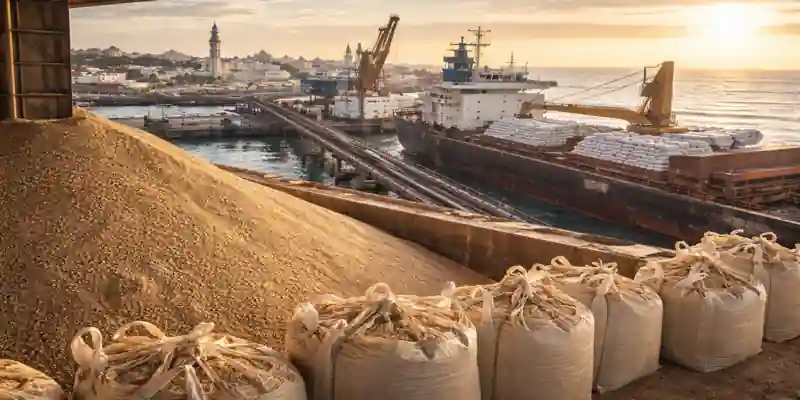
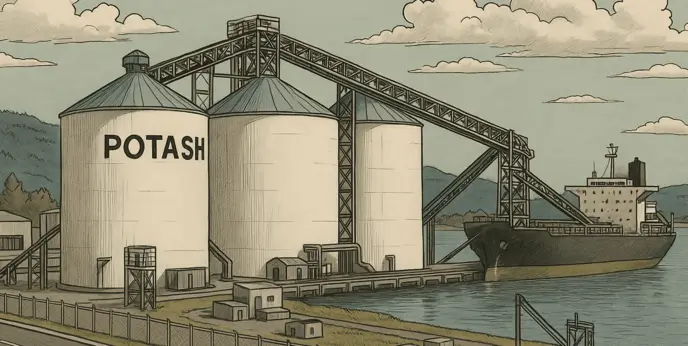
Canadian fertilizer giant Nutrien plans to invest US$1 billion in a new potash export terminal in Longview, Washington. The move aims to support rising demand for Saskatchewan-made potash, Reuters reported.
The Saskatoon-based company expects to take a final investment decision in 2027. Although Nutrien had earlier considered building the terminal in Canada, the U.S. location appears more competitive for global shipments.
In a statement, the company said its goal is to ensure that Canadian potash remains cost-effective in international markets.
“We assess major projects against operational, commercial, and financial criteria designed for long-term growth,” Nutrien stated.
When asked about reports that Canadian Transport Minister Steven MacKinnon requested meetings to convince the company to reconsider, Nutrien confirmed it maintains ongoing communication with government officials.
Strategic Review of Phosphate Business
Earlier this month, Nutrien announced a strategic review of its phosphate division. Options include:
Reconfiguring operations
Strategic partnerships
A potential sale
The company aims to finalize the best long-term plan for its phosphate business next year. Nutrien is the second-largest phosphate producer in North America, with two mines and four processing facilities in the U.S.
Potash Market Advantage for Canada
Saskatchewan’s potash remains shielded from U.S. tariffs under the CUSMA trade agreement. Nearly 50% of the province’s production is consumed in the U.S. each year.
Nutrien currently exports potash through Vancouver, Saint John, and Portland. Potash plays a key role in fertilizers, livestock feed, and industrial products.
Global phosphate supply remains tight due to export restrictions from China, pushing prices higher. Nutrien highlighted supply concerns in its recent financial disclosures.
Strong Financial Performance in Q3
Nutrien reported improved results for the quarter ending September 30:
Net earnings: US$469 million (vs. US$25 million last year)
EPS: US$0.96 (vs. US$0.04 last year)
Sales: US$6 billion (vs. US$5.35 billion last year)
Phosphate division revenue: Up 20% to US$495 million
The company expects global fertilizer demand to strengthen further in 2025 as affordability improves and supply challenges ease.